Inca · 1400–1533 AD
The Inca Ceque System
5 min read
Last updated March 11, 2026
Disclosure: This article contains affiliate links. If you purchase through these links, we may earn a small commission at no additional cost to you. This helps support The Forbidden Archive and allows us to continue our research. See our Privacy Policy for details.
Choose your reading style:

By Marcus Hale
Independent Researcher & Archive Curator
Deep within the heart of the Andes, where the majestic peaks pierce the clouds and ancient rivers carve their paths, lay the vibrant empire of the Inca. A civilization renowned for its sophisticated engineering, intricate social structures, and profound spiritual beliefs, the Inca left behind a legacy that continues to baffle and inspire. Among their most enigmatic creations is the Inca ceque system, a complex network of invisible lines radiating from the sacred city of Cusco. More than just a geographical arrangement, this system served as a cosmic blueprint, intertwining astronomy, religion, and social organization in a way few cultures have ever achieved.
Unveiling the Cusco Sacred Lines: A Cosmic Web
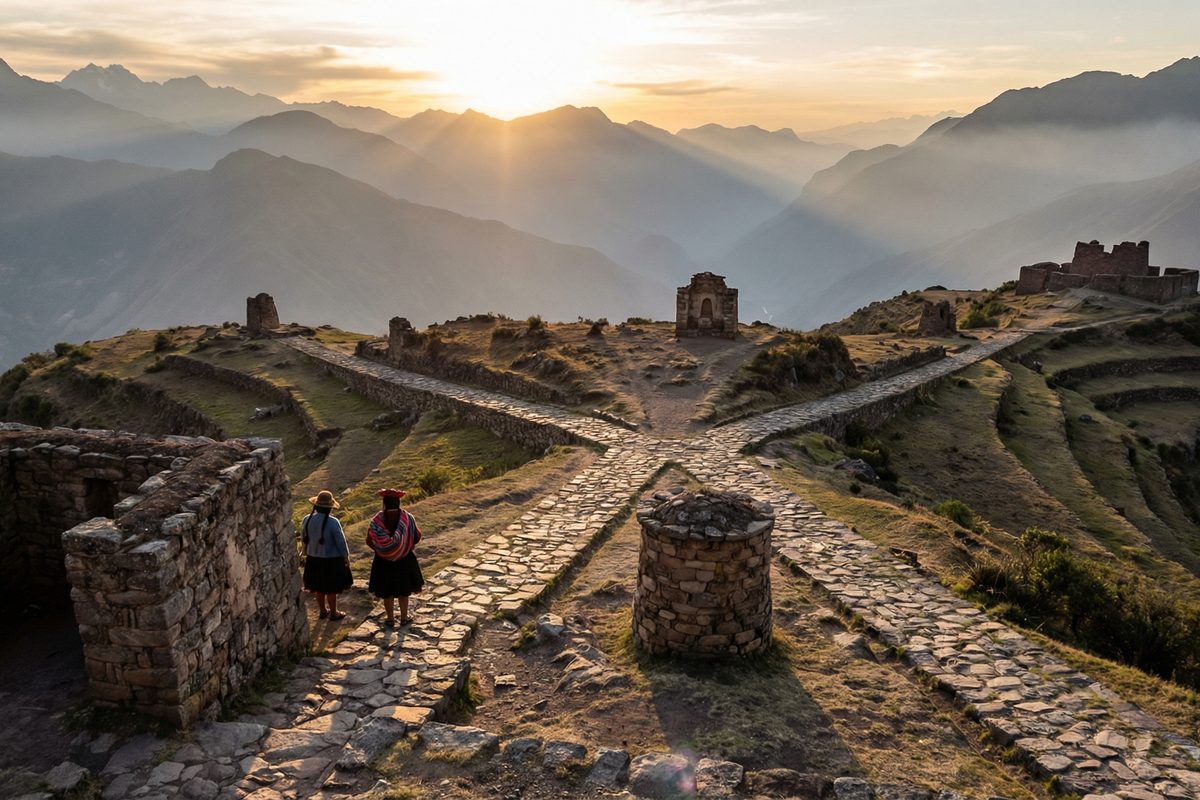
Imagine a vast, invisible web stretching across the landscape, connecting hundreds of sacred sites, or huacas. This is the essence of the Inca ceque system. From the central temple of Coricancha in Cusco, the Inca capital, an estimated 41 lines, or ceques, emanated outwards, each meticulously aligned with specific celestial phenomena and terrestrial features. Each ceque was not merely a straight line on a map; it was a conceptual pathway, a mnemonic device, and a ritual route.
The discovery and initial understanding of the ceque system largely stem from the meticulous work of Spanish chroniclers, particularly Father Bernabé Cobo in the early 17th century. Cobo, through interviews with surviving Inca nobility, documented the names of the ceques and many of the huacas associated with them. This invaluable record provides the bedrock for modern scholarly investigation into this extraordinary system.
The Huacas: Nodes of Power and Memory
Along each ceque, a series of huacas were situated. These huacas were not always grand temples; they could be natural features like springs, caves, rock outcrops, or even specific trees. They could also be man-made structures such as shrines, platforms, or even significant agricultural terraces. Each huaca held a specific spiritual significance, often linked to ancestors, deities, or important historical events. The order and placement of these huacas along a ceque were not random; they formed a sequential narrative, a ritual circuit to be followed during specific ceremonies.
The total number of huacas documented by Cobo is staggering, exceeding 350. This dense network highlights the profound spiritual connection the Inca had with their landscape, transforming the entire region around Cusco into a sacred mandala.
Inca Astronomy and the Ceque System: Charting the Cosmos
One of the most compelling aspects of the Inca ceque system is its undeniable link to astronomy. Many scholars propose that the ceques served as giant astronomical observatories, allowing the Inca to track the movements of celestial bodies. The alignment of certain ceques with solstices, equinoxes, and the rising and setting points of prominent stars and constellations suggests a sophisticated understanding of the cosmos.
The Sky as a Calendar: The Inca Calendar System
The ceque system likely played a crucial role in the Inca calendar system. By observing the rising and setting of celestial bodies along specific ceques and their associated huacas, the Inca could accurately determine the passage of time, predict agricultural cycles, and schedule religious festivals. The synchronization of terrestrial rituals with celestial events was paramount for the Inca, who believed in a harmonious relationship between the earthly and cosmic realms.
For example, some ceques are thought to have marked the rising of the Pleiades (Qollqa to the Inca), a star cluster whose appearance was vital for predicting the start of the planting season. Other alignments might have indicated the sun's path at the solstices, crucial for agricultural planning and ceremonial offerings.
The Ceque Lines Peru: A Social and Political Framework
Beyond its spiritual and astronomical functions, the ceque lines Peru also served as a sophisticated administrative and social tool. Each ceque was typically associated with a specific noble lineage or panaqa. These lineages were responsible for the maintenance of the huacas along "their" ceque, as well as for conducting the associated rituals and ceremonies. This system reinforced social hierarchies and distributed ritual responsibilities among the ruling elite.
The ceques also acted as a form of territorial demarcation, defining the areas of influence and responsibility for different groups within the Inca capital's sphere. This intricate organization helped to maintain order and cohesion within a rapidly expanding empire.
Scholarly Theories and Enduring Mysteries
Despite centuries of study, the Inca ceque system continues to present numerous mysteries. While Cobo's chronicle provides invaluable data, the precise function and meaning of every huaca and ceque remain open to interpretation. Scholars have proposed various theories to explain its complexity:
- Astronomical Observatory: This theory, as discussed, posits the ceques as a grand astronomical instrument for tracking celestial events and maintaining the Inca calendar system.
- Ritual Landscape: This perspective emphasizes the ceques as pathways for ritual processions and offerings, connecting sacred sites and reinforcing spiritual beliefs.
- Mnemonic Device: Some scholars suggest the ceques and huacas served as a vast memory aid, helping to transmit historical narratives, myths, and religious knowledge across generations.
- Social and Political Control: This theory highlights the role of the ceque system in organizing labor, distributing ritual duties, and reinforcing the power structure of the Inca state.
It is highly probable that the ceque system encompassed elements of all these theories, serving multiple interconnected functions within Inca society. The genius of the Inca lay in their ability to integrate seemingly disparate elements into a cohesive and functional whole.
The Legacy of the Inca Ceque System
The Inca ceque system stands as a testament to the intellectual prowess and spiritual depth of the Inca civilization (1400–1533 AD). It is a profound example of how an ancient culture could imbue its landscape with meaning, transforming the very earth into a sacred text. The precision of its alignments, the sheer number of its sacred sites, and its multifaceted functions continue to astound researchers. While many secrets of the ceque system remain hidden beneath the layers of time and conquest, its enduring presence serves as a powerful reminder of the sophisticated knowledge systems that flourished in the ancient Andes.
What other invisible networks, woven into the fabric of their world, might ancient civilizations have created, whose true purpose we are only beginning to comprehend?
Marcus Hale
Independent Researcher & Archive Curator
Marcus Hale is an independent researcher and the curator of The Forbidden Archive. He has spent over a decade studying anomalous ancient technologies, cross-referencing primary excavation reports, museum catalogues, and peer-reviewed journals to document artifacts that mainstream history struggles to explain.
📖 Take the Archive With You
Enjoyed this mystery? The full ebook covers 50 Ancient Mysteries in depth — lost technologies, suppressed histories, and artifacts that shouldn't exist. 300+ pages, instant PDF download.
Archive Record
Civilization
Inca
Time Period
1400–1533 AD
Approximate Date
1400–1533 AD
Further Research
The Incas: New Perspectives
Modern archaeological understanding of the Inca Empire's achievements.
Amazon
Turn Right at Machu Picchu
Adventure and archaeology in the footsteps of Hiram Bingham.
Amazon
Affiliate links — we may earn a commission at no cost to you.