Olmec · 900 BC
The Olmec Cascajal Block Decipherment
5 min read
Last updated January 27, 2026
Disclosure: This article contains affiliate links. If you purchase through these links, we may earn a small commission at no additional cost to you. This helps support The Forbidden Archive and allows us to continue our research. See our Privacy Policy for details.
Choose your reading style:

By Marcus Hale
Independent Researcher & Archive Curator
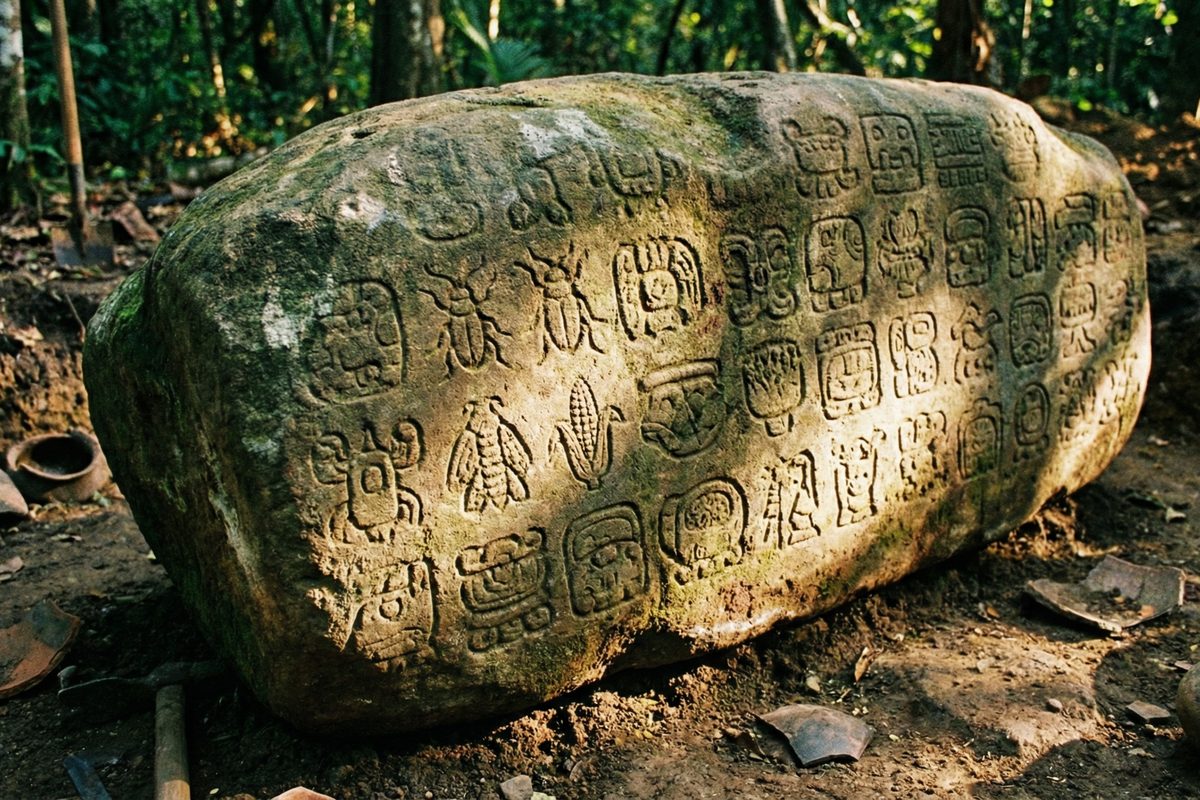
Deep within the humid lowlands of Veracruz, Mexico, a discovery in 1999 sent ripples through the world of ancient history. It was a serpentinite block, unassuming at first glance, but etched with 62 intricate glyphs. This artifact, later dubbed the Cascajal Block, would ignite a fierce debate and potentially rewrite the timeline of writing in the Americas. For centuries, the Olmec civilization, often called the "mother culture" of Mesoamerica, had been celebrated for its colossal heads, sophisticated artistry, and complex societal structure. But evidence of a fully developed writing system? That was a new and thrilling chapter.
Unearthing the Oldest Writing in the Americas
The story of the Cascajal Block begins in the village of Cascajal, near the ancient Olmec site of San Lorenzo. Local road builders, excavating a gravel pit, stumbled upon the block. Recognizing its potential significance, they brought it to archaeologists Carmen Rodríguez Martínez and Ponciano Ortiz Ceballos. What they held in their hands was a rectangular slab, approximately 36 cm long, 21 cm wide, and 13 cm thick, weighing around 12 kg. Its surface was smooth, deliberately prepared, and then incised with a series of glyphs arranged in horizontal rows. The archaeological context, specifically the pottery shards found alongside the block, firmly dated it to approximately 900 BC, placing it squarely within the Middle Formative period of Olmec culture.
The Cascajal Block: A Glimpse into Olmec Thought
The 62 glyphs on the Cascajal Block are unlike anything previously seen from the Olmec period. They include representations of insects, maize, fish, and various abstract symbols. What immediately struck researchers was the structured nature of the inscriptions. There are repeated sequences of symbols, suggesting a deliberate order and potentially a grammatical structure. Twenty-eight distinct glyphs have been identified, some appearing multiple times. This repetition and the linear arrangement are key indicators of a true writing system, not merely decorative motifs or isolated pictograms.
- **Key Features of the Cascajal Block:**
- 62 distinct glyphs arranged in horizontal rows.
- 28 unique symbols, with some appearing up to four times.
- Includes representations of natural elements (insects, plants, marine life).
- Dated to approximately 900 BC, making it the oldest known writing in the Americas.
- The block's surface shows evidence of having been erased and re-inscribed, suggesting it was a reusable writing surface.
The discovery of the Cascajal Block challenged long-held assumptions about the origins of Mesoamerican writing. Prior to this, the Zapotec civilization was generally credited with developing the earliest writing system, dating to around 500 BC. The Cascajal Block pushed that timeline back by a remarkable 400 years, firmly establishing the Olmec as potential innovators of written communication in the Western Hemisphere. This Olmec script, if definitively proven as a full writing system, would represent a monumental leap in human intellectual development.
Scholarly Debates and Interpretations
While the initial announcement of the Cascajal Block in the journal *Science* in 2006 was met with excitement, it also sparked considerable academic debate. The primary question revolved around whether the glyphs truly represented a full writing system or if they were a sophisticated form of iconography or proto-writing.
Arguments for a True Olmec Writing System:
Proponents, including the discoverers and linguists like Stephen Houston, point to several compelling features: the linear arrangement, the repetition of sequences, the clear distinction between individual glyphs, and the presence of a consistent internal order. They argue that these characteristics strongly suggest a system designed to convey linguistic information. The fact that the block appears to have been erased and re-inscribed also supports its use as a functional writing medium, perhaps for record-keeping or ritualistic purposes. The complexity of the Olmec civilization, with its elaborate religious practices, monumental architecture, and extensive trade networks, also makes the development of a sophisticated communication system highly plausible.
Skepticism and Alternative Theories:
However, some scholars remain cautious. One of the main points of contention is the lack of a known Rosetta Stone-like artifact to definitively decipher the Olmec script. Without a bilingual text or a clear understanding of the Olmec language, interpreting the meaning of the glyphs remains speculative. Critics also highlight that the block is an isolated find; no other extensive examples of this specific Olmec writing have been discovered. This raises questions about its widespread use and whether it was a fully developed system or an experimental phase. Some suggest the glyphs might represent a sequence of ritual symbols, a mnemonic device, or a highly stylized pictorial narrative rather than a phonetic or logographic script.
Another point of discussion concerns the arrangement of the glyphs. While generally linear, some sequences appear to be grouped, leading to questions about whether the reading order is strictly horizontal or if there are vertical or boustrophedon (alternating direction) elements. The unique nature of many of the symbols also makes direct comparisons to later Mesoamerican scripts challenging, though some researchers have noted potential ancestral links to later Mayan or Zapotec glyphs.
The Enduring Mystery of Olmec Script
Despite the ongoing debates, the Cascajal Block stands as a testament to the intellectual prowess of the ancient Olmec. Whether it represents the fully fledged Olmec writing system or an advanced form of proto-writing, it undoubtedly demonstrates a highly sophisticated level of symbolic communication at an incredibly early date. The discovery has forced a re-evaluation of the origins of literacy in the Americas and highlighted the Olmec's foundational role in Mesoamerican cultural development.
The search for more examples of Olmec script continues, as further discoveries could provide the crucial context needed for a definitive decipherment. Imagine the stories, histories, and religious beliefs that might be locked within these ancient symbols. The Cascajal Block is more than just a stone slab; it's a tantalizing whisper from a lost civilization, a challenge to our understanding, and a powerful reminder that the past still holds countless secrets waiting to be unveiled. The oldest writing in the Americas continues to captivate and mystify, inviting us to delve deeper into the enigmatic world of the Olmec.
Marcus Hale
Independent Researcher & Archive Curator
Marcus Hale is an independent researcher and the curator of The Forbidden Archive. He has spent over a decade studying anomalous ancient technologies, cross-referencing primary excavation reports, museum catalogues, and peer-reviewed journals to document artifacts that mainstream history struggles to explain.
📖 Take the Archive With You
Enjoyed this mystery? The full ebook covers 50 Ancient Mysteries in depth — lost technologies, suppressed histories, and artifacts that shouldn't exist. 300+ pages, instant PDF download.
Archive Record
Civilization
Olmec
Time Period
900 BC
Approximate Date
900 BC
Further Research
The Ancient Maya
The definitive academic text on Maya civilization and achievements.
Amazon
1491: New Revelations of the Americas Before Columbus
Groundbreaking account of pre-Columbian civilizations in the Americas.
Amazon
Affiliate links — we may earn a commission at no cost to you.