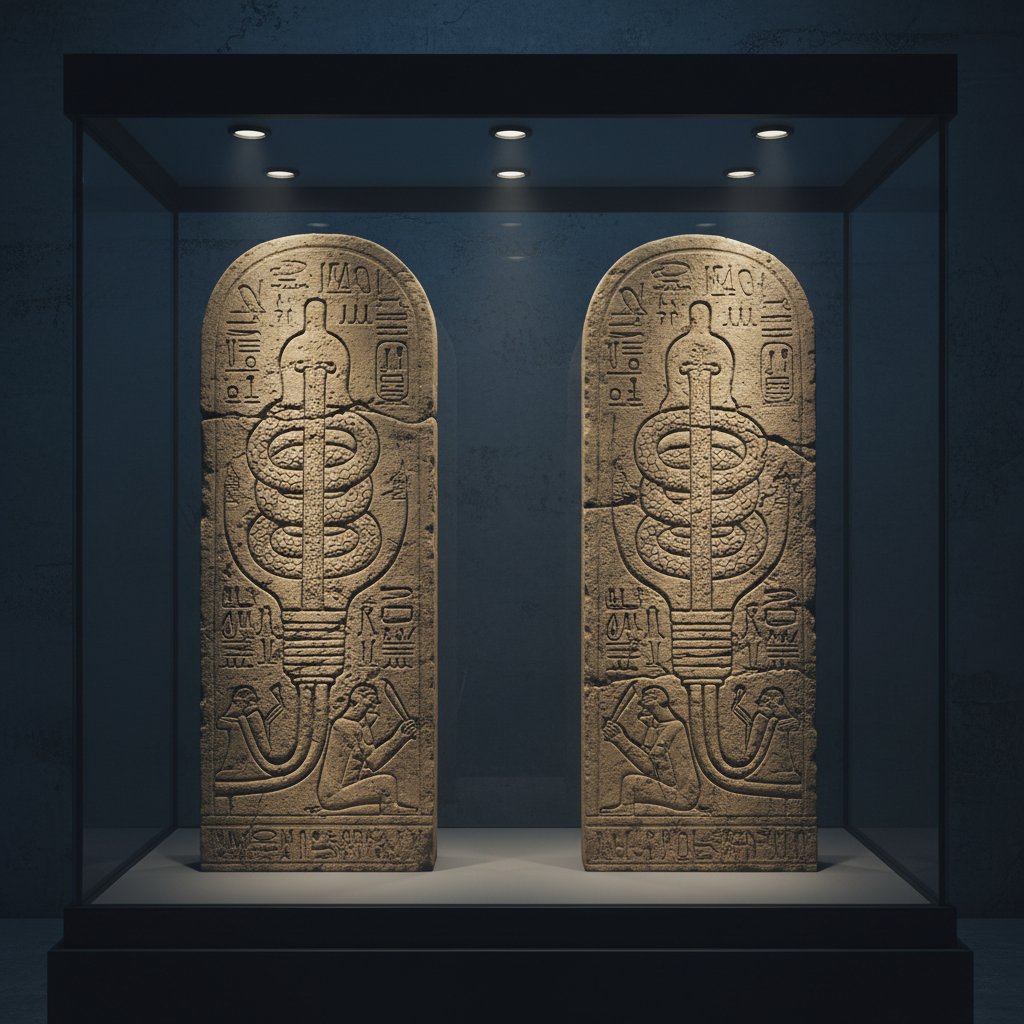
Dendera Light Bulbs
50 BCE – 50 CE
Stone reliefs in the Hathor Temple at Dendera depict what some researchers interpret as giant electric light bulbs, complete with what appears to be a filament, a lotus flower base, and a serpent inside. The mainstream explanation is purely religious symbolism.

Ebers Papyrus
1550 BCE
The Ebers Papyrus is a 20-metre-long Egyptian medical text from 1550 BCE containing 700 magical and rational remedies for conditions ranging from crocodile bites to depression. It includes the first known description of the cardiovascular system and a theory of the heart as the centre of blood supply — 3,400 years before William Harvey.

Edwin Smith Papyrus
1600 BCE (copy of 3000 BCE original)
The world's oldest known surgical document, dating to 1600 BCE but believed to be a copy of a text from 3000 BCE. It describes 48 cases of traumatic injury with rational, empirical diagnoses — no magic or prayer. It is the first known document to describe the brain, cranial sutures, and cerebrospinal fluid.
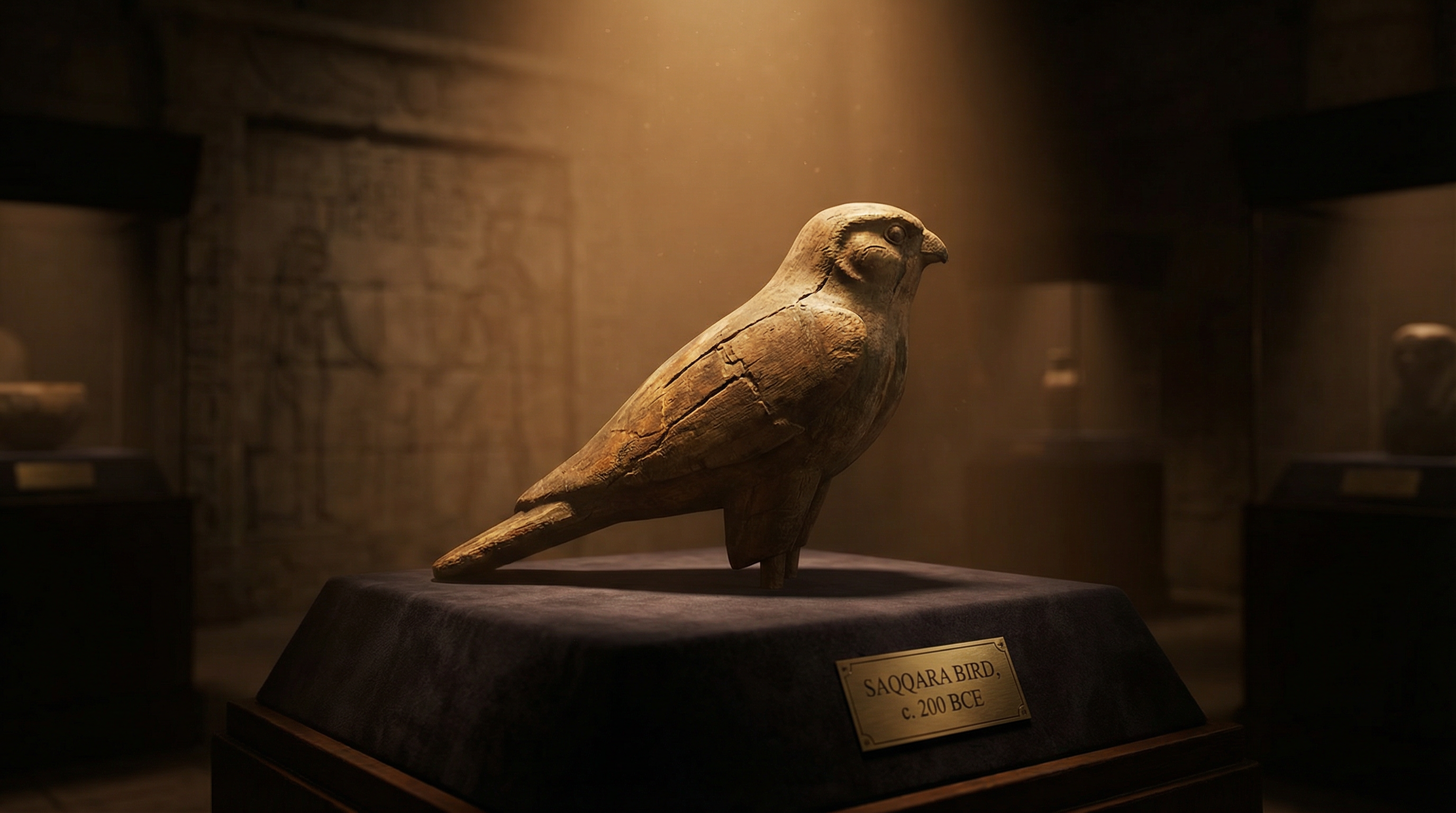
Saqqara Bird
200 BCE
A small wooden artifact discovered in a tomb at Saqqara in 1898, initially catalogued as a bird figurine. In 1969, Dr. Khalil Messiha noticed it had vertical tail fins and aerodynamic properties consistent with a glider or model aircraft, not any known bird.
The Antikythera Honey Jars of Tutankhamun
1323 BCE
When Howard Carter opened the tomb of Tutankhamun in 1922, he found sealed jars of honey that were still liquid and edible after 3,300 years. Honey is the only food known to have an indefinite shelf life due to its low moisture content, high acidity, and natural hydrogen peroxide production. The Egyptians understood this and used honey as both a food preservative and a wound dressing — a use now validated by modern medicine.

The Antikythera Linen of Ancient Egypt
3000 BCE
Ancient Egyptian linen from the Old Kingdom period (3000 BCE) has been found with thread counts of up to 540 threads per 10 cm — finer than the finest modern luxury linen (which typically reaches 200–300 threads per 10 cm). The linen was so fine that ancient Greek writers called it 'woven air.' Modern textile engineers have been unable to replicate the finest examples using any known technique, including modern industrial looms.
The Great Pyramid's Internal Chambers
2560 BCE
The internal structure of the Great Pyramid of Giza contains a system of chambers and passages whose purpose remains debated. In 2017, the ScanPyramids project using muon tomography discovered a previously unknown void at least 30 metres long above the Grand Gallery — the first major internal discovery since the 19th century.