Shang Dynasty China · Bronze Age
Chinese Bronze Casting Techniques
7 min read
Last updated April 4, 2026
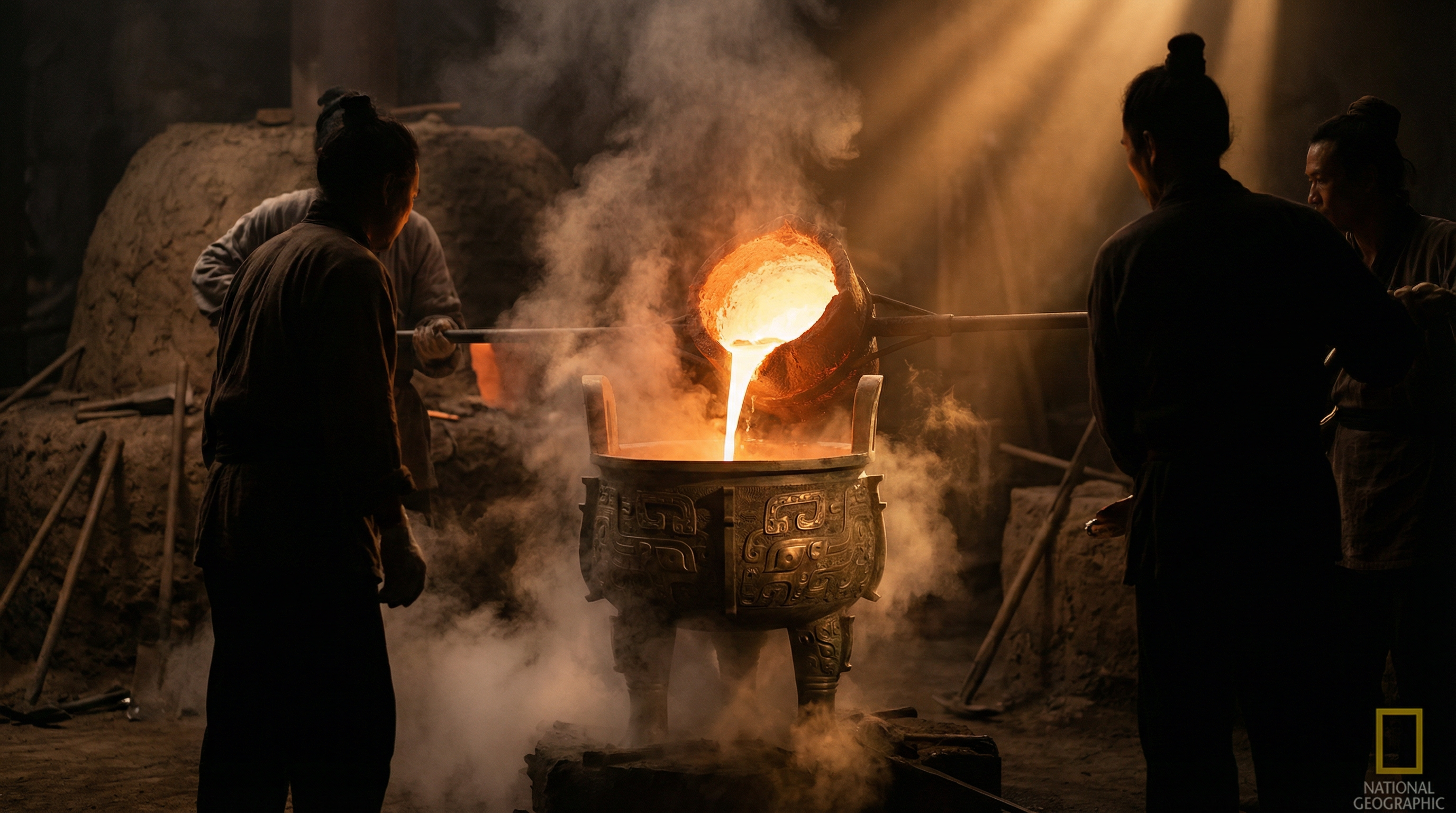
Shang Dynasty bronze vessels were cast using piece-mould techniques of extraordinary complexity, producing ritual vessels with intricate surface decorations that required multiple interlocking clay sections.
Choose your reading style:

By Marcus Hale
Independent Researcher & Archive Curator
Welcome, seekers of ancient wisdom, to The Forbidden Archive. Today, we delve into the molten heart of Bronze Age China, a realm where ritual and metallurgy intertwined to create objects of unparalleled beauty and engineering prowess. Forget what you thought you knew about early industrial capacity; the Shang Dynasty, flourishing over three millennia ago, forged a legacy in bronze that continues to astound archaeologists and metallurgists alike. Their mastery of bronze casting, particularly the intricate piece-mould technique, produced vessels of such complexity and scale that they challenge our very understanding of ancient technological capabilities. Prepare to journey into a world where artistry met alchemy, culminating in monumental creations like the Houmuwu Ding – a testament to an industrial organization previously unimaginable for its time.
Historical Background and Discovery Context
The Shang Dynasty (c. 1600-1046 BCE) represents a pivotal era in Chinese history, marking the emergence of a sophisticated state society characterized by urban centers, a complex social hierarchy, and a distinctive writing system. It was during this period that bronze, an alloy of copper and tin (and sometimes lead), became the preeminent material for weapons, tools, and, most notably, ritual vessels. These vessels, known as dings, guis, and jues, were not merely utilitarian; they were sacrosanct objects, central to ancestor worship, state ceremonies, and the assertion of political power. Their elaborate designs, often featuring zoomorphic motifs like the taotie mask, served as powerful symbols connecting the living with the spirit world.
The discovery of these magnificent bronzes, often from royal tombs and ritual pits, began in earnest in the early 20th century. Sites like Anyang, the last Shang capital, have yielded thousands of artifacts, painting a vivid picture of a civilization deeply invested in bronze production. However, it was the unearthing of the Houmuwu Ding in 1939 near Anyang that truly redefined our perception of Shang metallurgical capabilities. Buried in the tomb of Fu Hao, a military general and consort of King Wu Ding, this colossal vessel immediately stood out. Its sheer size and weight – an astonishing 832 kilograms (1,834 pounds) – dwarfed all previously known ancient bronzes, demanding a complete re-evaluation of the techniques and organization required for its creation.
Technical Analysis and What Makes It Remarkable
The Shang Dynasty did not utilize the lost-wax casting method, which became prevalent in later periods and other cultures. Instead, they perfected the piece-mould casting technique, a process of extraordinary complexity and precision. This method involved creating a detailed clay model of the desired vessel, which was then covered with layers of clay to form an outer mould. Once dried, the outer mould was cut into several interlocking sections, allowing for its removal. The original model was then shaved down to create the inner core, which would form the interior of the vessel. The intricate designs and motifs were not applied to the wax, but meticulously carved directly into the clay sections of the outer mould and the inner core before firing. This allowed for incredibly sharp, detailed, and often deeply recessed ornamentation.
What makes this technique truly remarkable, especially for a vessel like the Houmuwu Ding, is the scale and precision required. Imagine: a central core, surrounded by dozens, if not hundreds, of individually carved and fired clay mould sections, all fitting together perfectly to form the complex exterior. These sections, often held in place by clay keys and bronze spacers, had to be precisely aligned to ensure a seamless join and an even wall thickness. The gaps between the inner core and the outer mould sections would then form the space into which the molten bronze would be poured.
The creation of the Houmuwu Ding, in particular, represents the zenith of this technology. Its immense size dictated an equally immense logistical undertaking. Metallurgical analysis suggests it was cast in a single pour, a feat that would have required:
- Multiple Furnaces: To melt 832 kg of bronze simultaneously, numerous crucibles, each holding a substantial amount of molten metal, would have been necessary. Estimates suggest at least 10-12 large crucibles, each potentially weighing hundreds of kilograms when full, would have been in operation.
- Consistent Temperature Control: Maintaining the bronze in all crucibles at the optimal pouring temperature – hot enough to flow freely but not so hot as to damage the clay moulds – would have demanded exceptional skill and coordination.
- Simultaneous Pouring: The coordinated pouring of molten bronze from multiple crucibles into the intricate network of mould gates, all at precisely the same moment, was critical to prevent cold shuts (where different streams of metal solidify before fusing properly) and ensure a homogenous casting. This would have involved dozens, if not hundreds, of highly skilled workers operating under strict command.
- Sophisticated Mould Engineering: The design of the mould itself, including the network of gates and risers to ensure even filling and prevent air pockets, was a testament to advanced engineering principles.
Competing Theories and Scholarly Debate
While the general consensus points to the piece-mould casting method for Shang bronzes, the sheer scale of the Houmuwu Ding has sparked considerable debate regarding the exact process and the level of societal organization it implies. Some early theories, particularly before extensive archaeological evidence, struggled to reconcile such sophisticated production with the perceived "primitive" nature of early Bronze Age societies. However, modern archaeological findings, including the discovery of large-scale bronze workshops and evidence of specialized labor at Shang sites, have largely solidified the understanding of their advanced capabilities.
The primary debates now revolve around the precise number of workers involved, the exact design of the furnaces and crucibles, and the nature of the command structure that could orchestrate such a complex operation. Some scholars emphasize the ritualistic aspect, suggesting that the entire process was imbued with spiritual significance, guiding the meticulous efforts. Others focus on the purely technical and organizational challenges, highlighting the pragmatic genius of Shang engineers and metallurgists. The lack of detailed written accounts from the Shang period describing the casting process leaves room for interpretation, but the physical evidence speaks volumes.
Why This Challenges Conventional Historical Narratives
The existence and creation of the Houmuwu Ding, and indeed the entire corpus of Shang bronzes, profoundly challenges conventional historical narratives about the development of industrial capacity and complex societal organization. For a long time, the "cradle of civilization" narrative often focused on Mesopotamia and Egypt, with other regions seen as developing later or less sophisticatedly. The Shang Dynasty's bronze industry forces a re-evaluation of this Eurocentric bias.
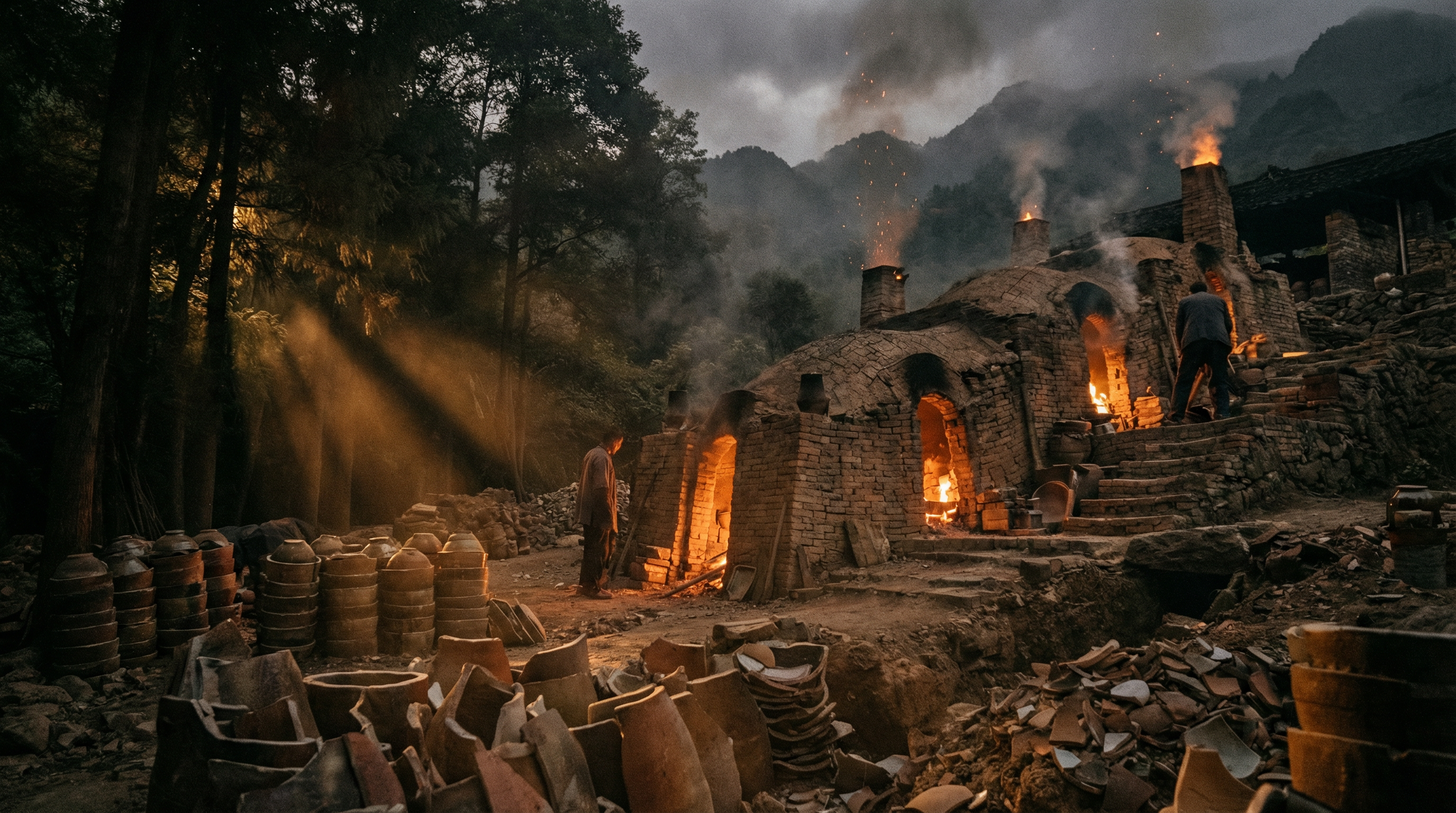
The scale of production, the specialization of labor, the mastery of materials science, and the logistical coordination required for casting a vessel like the Houmuwu Ding imply a level of industrial organization, resource management, and social stratification that was previously attributed only to much later periods or different civilizations. It suggests a powerful, centralized state capable of mobilizing vast resources – miners for copper and tin, woodcutters for fuel, potters for clay moulds, and skilled metallurgists and laborers for the casting process – and directing them towards a common, monumental goal. This was not merely craft production; it was an early form of industrial manufacturing, driven by ritual, power, and an astonishing command over technology.
Conclusion with Lasting Significance
The bronze casting techniques of the Shang Dynasty stand as a towering achievement in the annals of human technological innovation. The piece-mould method, perfected to an art form, allowed for the creation of vessels that were not only aesthetically breathtaking but also engineering marvels. The Houmuwu Ding, in particular, remains a potent symbol of this mastery, a silent testament to the ingenuity, organizational prowess, and artistic vision of a civilization that flourished over three millennia ago.
Its significance extends beyond mere metallurgy. It offers a window into the political, social, and religious structures of the Shang state, revealing a society capable of immense collective effort and precise execution. The challenges overcome in its creation speak to a deep understanding of materials, heat, and logistics, pushing the boundaries of what was thought possible in the Bronze Age. As we continue to uncover the secrets of ancient China, the fiery forges of the Shang remind us that innovation and complexity are not linear progressions, but rather arise in diverse forms and places, often challenging our preconceived notions of history and human potential. The Forbidden Archive will continue to explore such profound mysteries, bringing to light the extraordinary achievements of our ancestors.
Marcus Hale
Independent Researcher & Archive Curator
Marcus Hale is an independent researcher and the curator of The Forbidden Archive. He has spent over a decade studying anomalous ancient technologies, cross-referencing primary excavation reports, museum catalogues, and peer-reviewed journals to document artifacts that mainstream history struggles to explain.
Competing Theories
The logistics of casting the Houmuwu Ding — coordinating multiple furnaces, maintaining consistent temperature, and pouring simultaneously — implies a level of industrial organisation not previously attributed to Bronze Age China.


Archive Record
Civilization
Shang Dynasty China
Time Period
Bronze Age
Approximate Date
c. 1600–1046 BCE
Origin
Yellow River Valley, China
Current Location
National Palace Museum, Taipei; Palace Museum, Beijing
Materials
Bronze (copper-tin alloy), clay moulds