Satavahana / Vakataka Empire · Classical Antiquity
Ajanta Cave Paintings
5 min read
Last updated April 4, 2026
Thirty Buddhist cave temples containing murals of extraordinary sophistication, painted with pigments and techniques that have preserved their vibrancy for 2,000 years.
Choose your reading style:

By Marcus Hale
Independent Researcher & Archive Curator
The Whispers of Time: Unveiling Ajanta's Artistic Enigma
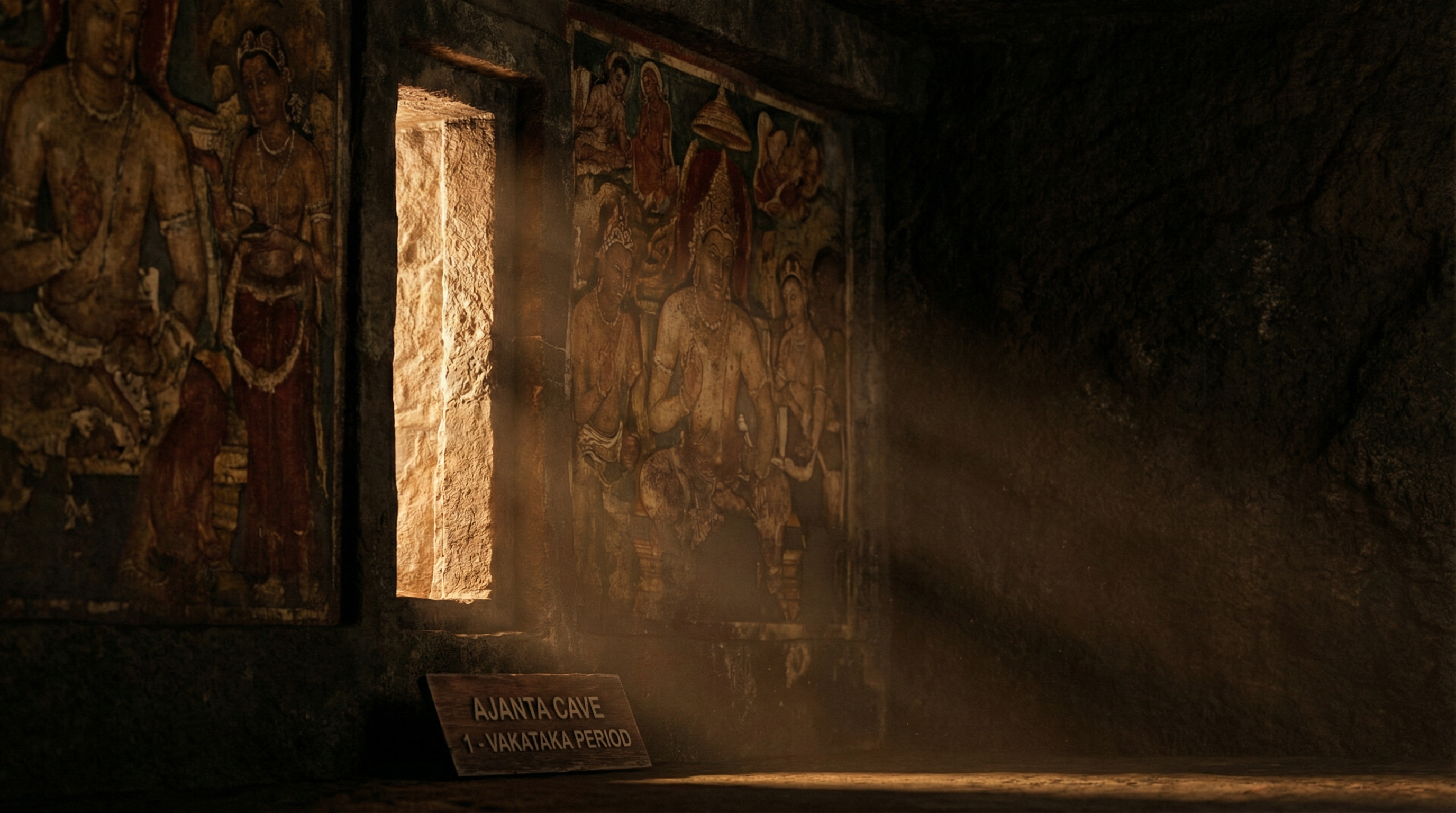
Deep within the horseshoe-shaped ravine of the Waghora River in Maharashtra, India, lies a testament to human artistic genius and engineering prowess that continues to defy conventional understanding. The Ajanta Caves, a sprawling complex of thirty rock-cut Buddhist cave temples, are not merely architectural marvels; they are a vibrant, living canvas. Adorning their walls and ceilings are murals of such extraordinary sophistication and enduring vibrancy that they challenge our perceptions of ancient art and technology. For nearly two millennia, these paintings, depicting the life of Buddha and Jataka tales, have retained their breathtaking colour and detail, a silent, resplendent challenge to the ravages of time. How did ancient artists, working in the dim light of oil lamps, achieve such an enduring masterpiece? The answer lies in a complex interplay of material science, artistic skill, and perhaps, forgotten knowledge.
Echoes of Empires: History and Rediscovery
The story of Ajanta spans two distinct periods of patronage and artistic flourishing. The earliest caves (numbered 9, 10, 12, 13, and 15A) date back to the 2nd century BCE, during the Satavahana dynasty. These Hinayana (Theravada) Buddhist caves are characterized by simpler chaitya-grihas (prayer halls) and viharas (monasteries). After a period of abandonment, the site experienced a magnificent resurgence from the 5th to the 6th century CE, under the patronage of the Vakataka dynasty, particularly during the reign of Emperor Harishena. It is to this later Mahayana phase that the most celebrated and elaborate paintings belong, transforming the caves into veritable art galleries. Following the decline of the Vakataka empire, Ajanta was once again abandoned, slowly succumbing to the encroaching jungle. For over a thousand years, these masterpieces lay hidden, protected by nature's embrace, until their accidental rediscovery in 1819 by a British officer, John Smith, who was on a tiger hunt. The sight that greeted him, and subsequently the world, was nothing short of miraculous – a vibrant, intact artistic legacy frozen in time.
A Symphony of Pigments and Plaster: The Technical Marvel
What truly sets the Ajanta paintings apart is not just their artistic merit, but the astonishing resilience of their colours. The artists employed a palette of mineral pigments and vegetable dyes, meticulously applied to a carefully prepared plaster surface. This wasn't a simple whitewash; the technique involved a complex multi-layer process. First, the rough-hewn rock surfaces were coated with a mixture of clay, cow dung, and rice husks, providing a coarse base. Over this, a finer layer of lime plaster, often mixed with rock dust or sand, was applied and painstakingly smoothed to a mirror-like finish. It was on this pristine, still-damp surface that the artists began their work. The pigments themselves are a marvel: vibrant reds from ochre, brilliant blues from lapis lazuli (a precious stone imported from distant Afghanistan, highlighting extensive trade networks), deep greens from glauconite or terre verte, and dazzling whites from kaolin or lime. Carbon black was used for outlines and shadows, and yellow ochre provided golden hues. The application technique demonstrates an advanced understanding of colour theory, perspective, and foreshortening, creating a sense of depth and realism that was centuries ahead of its time in many parts of the world.
Unraveling the Binder: Scholarly Debates and Enduring Mysteries
Despite extensive research, one of the most enduring mysteries surrounding the Ajanta paintings is the precise nature of the binding medium that allowed these pigments to adhere so perfectly and retain their luminosity for two millennia. While the technique is often broadly categorized as 'fresco secco' (painting on dry plaster), the extraordinary durability suggests something more complex than simple dry application. Some researchers theorize that the artists employed a form of tempera, where pigments are mixed with an organic binder such as animal glue, casein (milk protein), or even vegetable gums. However, definitive chemical analysis has been challenging due to the delicate nature of the samples and the age of the paintings. The presence of organic compounds has been detected, but their precise identification and role in the binding process remain a subject of intense scholarly debate. The possibility of a unique, localized technique, perhaps a hybrid of fresco secco and a sophisticated tempera, not explicitly documented in surviving Indian texts, continues to tantalize art historians and conservation scientists alike. The exact recipe, passed down through generations of master artists, may be a secret lost to time.
Challenging the Canon: Ajanta's Revolutionary Impact
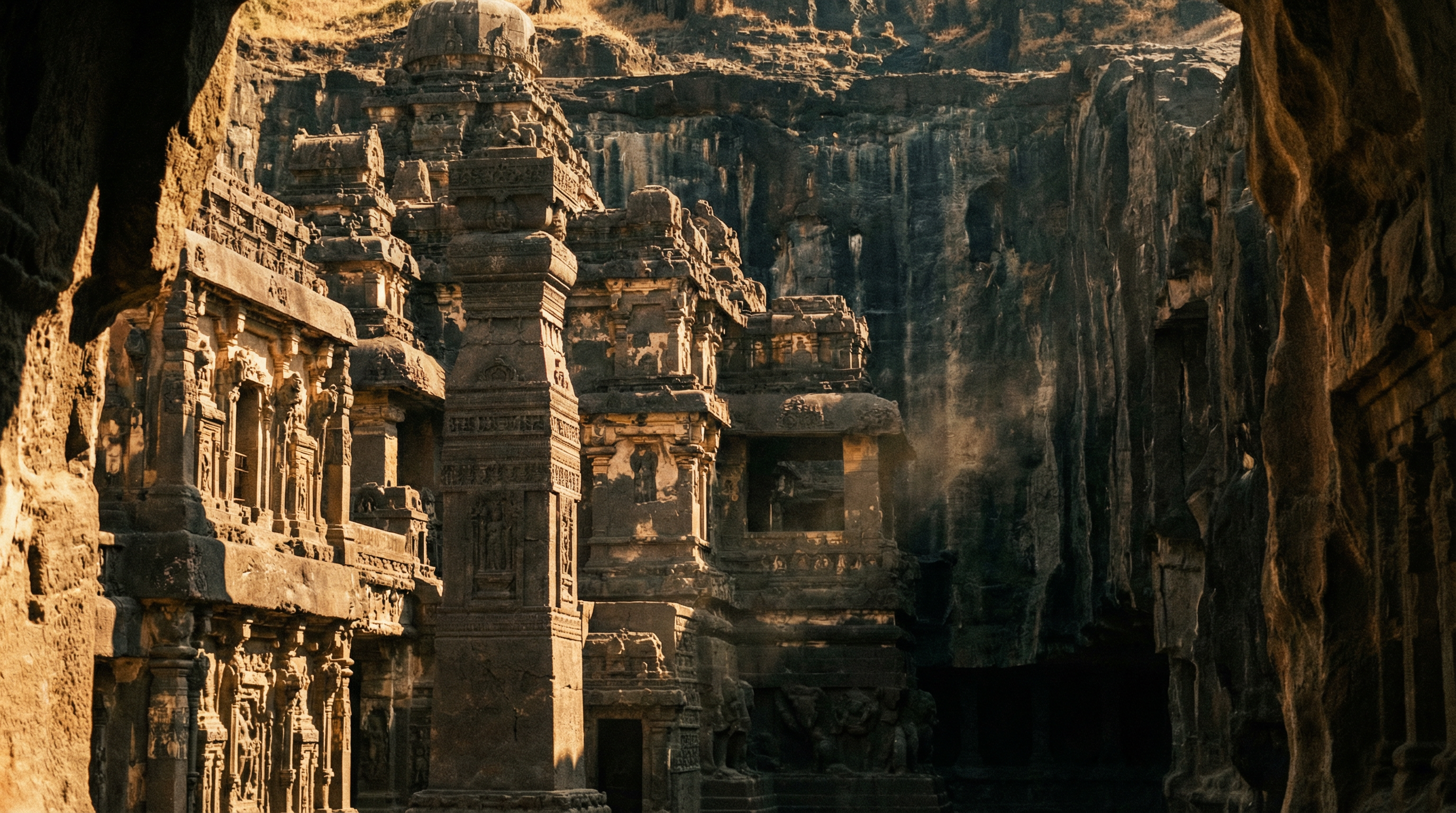
The Ajanta paintings fundamentally challenge many conventional historical narratives about the development of art and technology. Their sophisticated use of colour, depth, and human emotion predates similar developments in European art by centuries. The importation of lapis lazuli from Afghanistan speaks volumes about the extensive trade routes and interconnectedness of ancient civilizations, demonstrating a globalized world long before the term was coined. Furthermore, the sheer scale of the undertaking – carving thirty caves out of solid rock and then decorating them with such intricate, vibrant murals – highlights the organizational capabilities, engineering expertise, and artistic patronage of the Vakataka empire. It forces us to reconsider the perceived technological limitations of classical antiquity and underscores the advanced scientific and artistic knowledge that flourished in ancient India. Ajanta is not merely an isolated artistic phenomenon; it is a profound statement about the capabilities of ancient human ingenuity.
A Legacy in Pigment: The Enduring Significance
Today, the Ajanta Caves stand as a UNESCO World Heritage Site, a fragile yet potent reminder of a glorious past. Their significance extends beyond art history; they are invaluable historical documents, offering glimpses into the daily life, fashion, customs, and religious beliefs of classical India. The enduring vibrancy of the paintings serves as an inspiration for modern conservation science, pushing the boundaries of material analysis and preservation techniques. As we continue to study the Ajanta murals, we are not just admiring ancient art; we are engaging in a dialogue with a lost civilization, attempting to decipher the secrets of their materials, their methods, and their profound artistic vision. The Ajanta paintings are more than just colours on a wall; they are a testament to humanity's timeless quest for beauty, meaning, and transcendence, a legacy that continues to glow with an almost mystical light, two millennia after its creation.
Marcus Hale
Independent Researcher & Archive Curator
Marcus Hale is an independent researcher and the curator of The Forbidden Archive. He has spent over a decade studying anomalous ancient technologies, cross-referencing primary excavation reports, museum catalogues, and peer-reviewed journals to document artifacts that mainstream history struggles to explain.
Competing Theories
The painting technique involved a complex multi-layer process of lime plaster, adhesive, and pigment application. Some researchers believe the artists used a form of tempera or fresco secco not documented in Indian texts.
Archive Record
Civilization
Satavahana / Vakataka Empire
Time Period
Classical Antiquity
Approximate Date
c. 2nd century BCE – 5th century CE
Origin
Aurangabad, Maharashtra, India
Current Location
Ajanta Caves, Maharashtra (UNESCO World Heritage Site)
Materials
Mineral pigments, vegetable dyes on plaster