Indus Valley Civilization · Bronze Age
Indus Valley Drainage System
9 min read
Last updated April 4, 2026
A city-wide sewage and drainage network at Mohenjo-daro that predates Roman plumbing by 2,000 years, with covered drains, inspection chambers, and waste management infrastructure.
Choose your reading style:

By Marcus Hale
Independent Researcher & Archive Curator
Imagine a city, thousands of years before the Roman Empire, where every home was connected to a sophisticated network of drains, where waste was efficiently carried away, and public health was a paramount concern. This isn't a utopian fantasy, but a stark reality unearthed from the sands of what is now Pakistan and India. The Indus Valley Civilization, a Bronze Age marvel, presents us with an engineering enigma that continues to baffle and inspire: a drainage system so advanced, it wouldn't be replicated in Europe until the 19th century. At the heart of this revelation lies Mohenjo-daro, a city whose very foundations whisper tales of an unparalleled urban planning foresight.
How did a civilization, without iron tools or known written records detailing their engineering prowess, achieve such a feat? The answer lies buried beneath layers of time, challenging our most fundamental assumptions about ancient capabilities and the trajectory of human progress. This article seeks to uncover the layers of this ancient urban sophistication, exploring the discovery, the technical mastery, the debates it has sparked, and the profound implications it holds for our understanding of history.
Historical Background and Discovery
The Indus Valley Civilization, also known as the Harappan Civilization, flourished from approximately 2500 to 1900 BCE, making it a contemporary of ancient Egypt and Mesopotamia. Unlike its more famous counterparts, which left behind monumental temples and elaborate royal tombs, the Indus cities are remarkable for their meticulous urban planning and civic infrastructure. The discovery of Mohenjo-daro and Harappa in the 1920s by archaeologists like R.D. Banerji and John Marshall unveiled a civilization of astonishing order and foresight.
What immediately struck researchers was the grid-like layout of the cities, standardized brick sizes, and, most notably, an intricate system of water management and waste disposal. This wasn't a haphazard collection of dwellings, but a deliberately designed urban environment, where sanitation appears to have been a cornerstone of public life. The sheer scale and uniformity of this infrastructure across multiple sites suggested a powerful, centralized authority capable of orchestrating massive public works.
Prior to these discoveries, the Indus Valley remained largely unknown to the Western world, often overshadowed by the grandeur of Egyptian pyramids or Mesopotamian ziggurats. Yet, the unearthing of these cities revealed a civilization that had mastered an urban complexity that rivaled, and in some respects exceeded, that of its contemporaries. The fact that their sanitary engineering predates similar European systems by millennia only adds to the mystery and importance of these findings.
Archaeological excavations revealed that cities such as Kalibangan, Lothal, and Dholavira also shared many of these sophisticated features, indicating a widespread cultural or administrative framework that emphasized functional urban design. These discoveries have continuously enriched our understanding of early human settlements and their capacity for innovation, pushing back the timelines of urban sanitation development far beyond previous historical assumptions.
Technical Analysis and What Makes It Remarkable
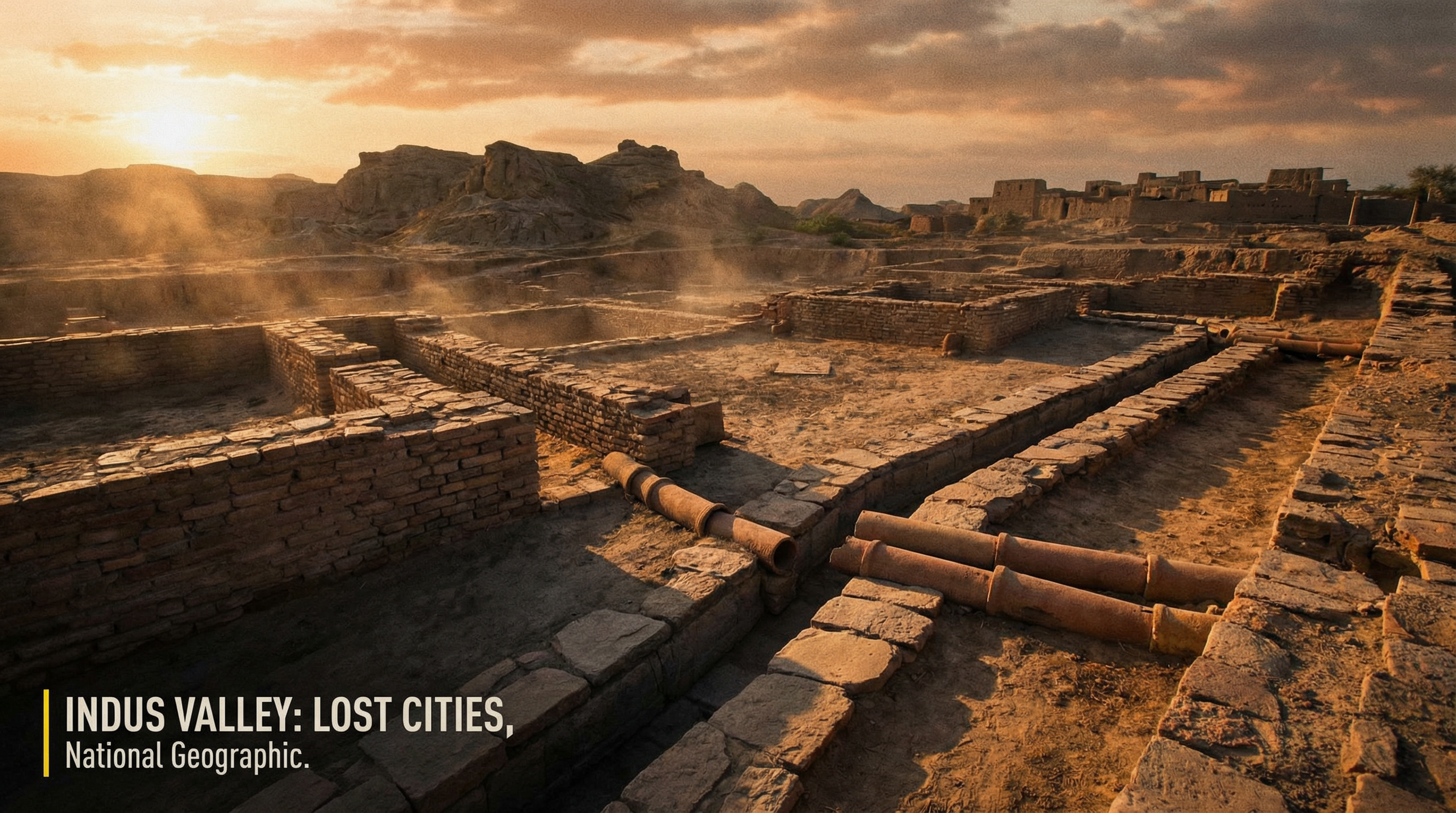
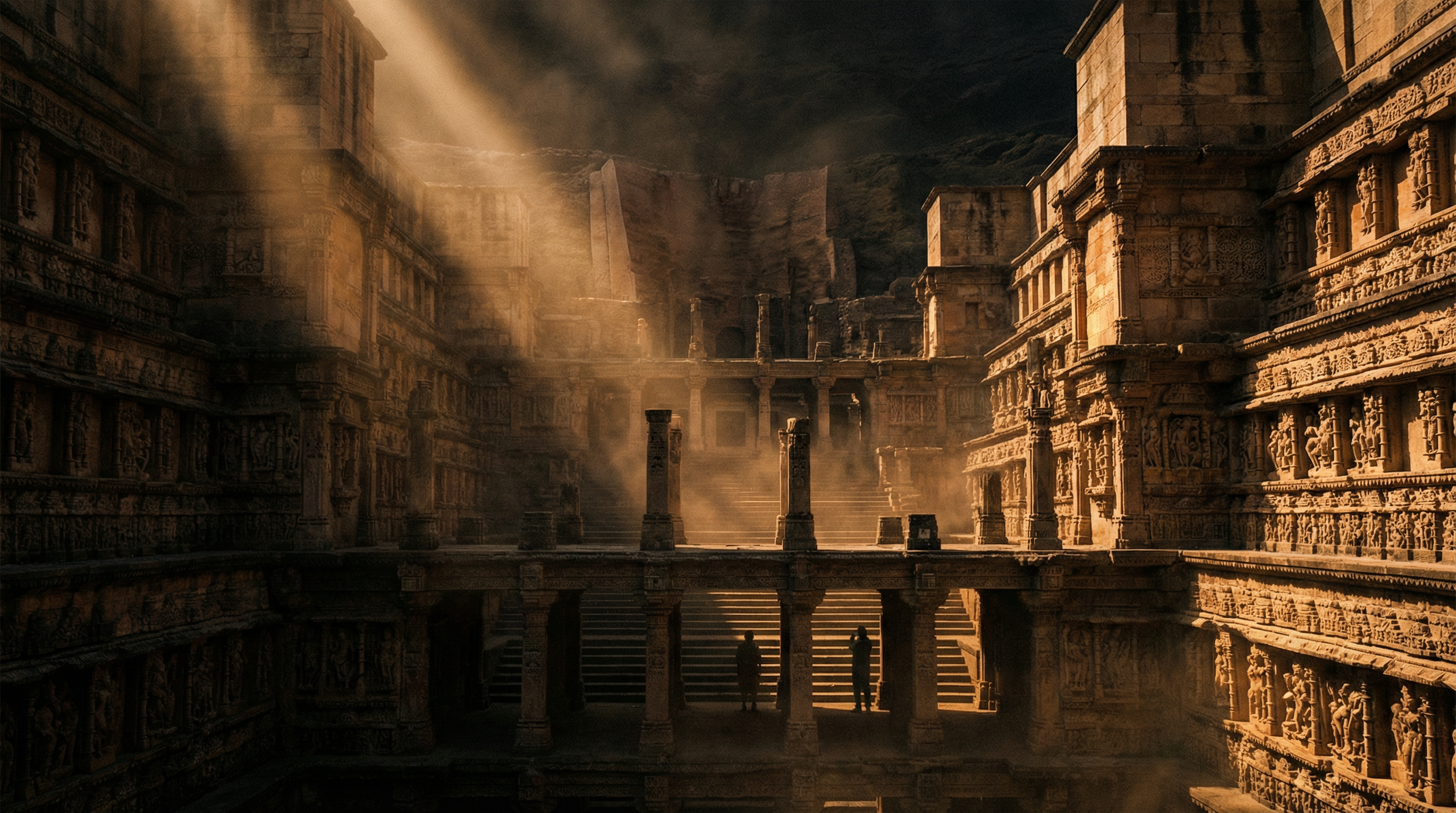
The drainage system of Mohenjo-daro is nothing short of an engineering marvel. It comprised a complex network of covered drains, often running beneath the main streets and connecting to individual houses. These drains were constructed with precisely cut, kiln-fired bricks, laid with gypsum mortar – a waterproof material. The use of fired bricks was crucial, providing durability and resistance to water erosion, a stark contrast to the sun-dried bricks often used in other contemporary civilizations.
The main drains were large enough for a person to walk through, indicating a sophisticated understanding of maintenance and accessibility. Crucially, these main arteries were equipped with "manholes" or inspection chambers at regular intervals, allowing for cleaning and repair. This foresight in design speaks volumes about the long-term planning ingrained in Harappan urbanism.
Beyond the main thoroughfares, individual houses were equipped with their own bathing areas and latrines, often connected to the street drains via smaller, carefully sloped channels. Waste water from these domestic facilities flowed into sumps or cesspits, where solid waste would settle, and overflow would then join the main drainage system. Some houses even featured chutes that led directly into the street drains, demonstrating a direct connection between private dwellings and public sanitation.
The gradient of these drains was meticulously calculated to ensure efficient flow, preventing blockages and stagnation. This level of hydraulic engineering, applied across an entire city and replicated in others like Harappa, Kalibangan, and Lothal, points to a deep understanding of fluid dynamics and civil engineering principles that we are only now beginning to fully appreciate.
Key technical features include:
- Standardized brick sizes ensuring uniformity and fit in construction
- Gypsum mortar usage providing waterproofing and durability
- Covered drains protecting the system from debris and contamination
- Manholes for maintenance and inspection
- Efficient gradient design preventing water stagnation and blockages
Such engineering was unprecedented for its time, especially given the lack of iron tools and the absence of written technical manuals. The sophistication implies not only skilled artisans and engineers but also a societal framework that prioritized and supported such public works. The integration of private and public sanitation reflects a holistic approach to urban living standards, emphasizing hygiene and public health as communal responsibilities.
Competing Theories and Scholarly Debate
The existence of such an elaborate and standardized drainage system has sparked considerable debate among scholars. Who designed it? How was it managed? The prevailing theory suggests a highly centralized municipal authority, perhaps a council or a priestly class, that was responsible for urban planning and public health. The uniformity in brick sizes and city layouts across hundreds of miles implies a strong central administration capable of enforcing standards and coordinating vast labor forces. This challenges the notion of Bronze Age societies as solely focused on monumental religious structures or royal palaces.
Instead, the Indus people seem to have prioritized civic amenities and the well-being of their populace. This prioritization raises questions about the nature of their political and social organization. The absence of grand palaces, temples, or explicit royal iconography leaves a void in our understanding of their political structure. Was it a benevolent oligarchy? A merit-based system? A form of proto-democratic governance? The archaeological record remains silent on these questions, fueling ongoing scholarly debate.
The "Great Bath" at Mohenjo-daro, a large public bathing facility, further underscores the importance of water and hygiene, possibly for ritualistic purposes, but also undeniably for public sanitation. Some scholars argue that the emphasis on cleanliness and public works points to a society with a strong sense of communal responsibility and perhaps even an early form of urban governance that prioritized collective welfare over individual display of power.
Others propose alternative hypotheses:
- Technocratic leadership: Engineers or specialist groups directing urban development without a traditional monarchy
- Religious governance: Priesthoods using ritual purity as a driver for sanitation infrastructure
- Decentralized cooperation: Multiple autonomous communities agreeing on standards through shared cultural values
The lack of clear evidence for a standing army or vast fortifications also suggests a relatively peaceful society, where resources were directed towards infrastructure rather than defense. This peacefulness may have allowed for a focus on long-term urban planning over militarization, a rarity among ancient civilizations. Nonetheless, the enigmatic nature of their political system, combined with their technical achievements, continues to intrigue historians and archaeologists alike.
Why This Challenges Conventional Historical Narratives
The Indus Valley drainage system is more than just an ancient feat of engineering; it is a profound challenge to our conventional understanding of historical development. For centuries, the Roman Empire has been lauded as the pioneer of sophisticated urban plumbing and sanitation. Yet, Mohenjo-daro's system predates Rome by two millennia, demonstrating a level of urban planning and public health consciousness that was not matched in Europe until the Industrial Revolution of the 19th century.
This forces us to reconsider the linear progression of technological and societal advancement often presented in historical narratives. It suggests that complex urban societies, with advanced infrastructure, could emerge independently and develop unique solutions to common problems like waste management. The Indus civilization's focus on civic amenities, rather than ostentatious displays of power, offers an alternative model of urban development.
It prompts questions about what truly constitutes "advancement" and whether our modern metrics adequately capture the ingenuity of ancient cultures. The Harappans demonstrated that a society could prioritize public health and urban functionality at an incredibly early stage, without necessarily developing a highly stratified social structure or a powerful military-industrial complex.
This challenges several entrenched assumptions:
- That technological progress is a steady, linear path culminating in Western industrial societies
- That monumental architecture is the primary indicator of societal complexity
- That ancient civilizations necessarily prioritized military might over civic welfare
Instead, the Indus Valley Civilization invites us to appreciate a different trajectory of human development, one where engineering excellence and public health were not secondary concerns but foundational pillars of society. This invites historians and archaeologists to broaden their analytical frameworks and seek out other overlooked or misunderstood ancient innovations worldwide.
Conclusion and Lasting Significance
The Indus Valley drainage system stands as a silent testament to a civilization that valued order, hygiene, and perhaps, the collective well-being of its citizens. Its sophisticated design, durable construction, and widespread application across multiple urban centers reveal an unparalleled understanding of urban planning and civil engineering in the Bronze Age. It reminds us that innovation is not exclusive to any single culture or era, and that remarkable achievements can emerge from unexpected corners of the ancient world.
For archaeologists and urban planners today, the Harappan drainage system serves as a powerful reminder of the enduring importance of infrastructure in creating livable and sustainable cities. It challenges us to look beyond the grand monuments and consider the often-overlooked, yet fundamentally crucial, aspects of daily life that define a civilization. The unseen genius of the Indus Valley, flowing beneath the ancient streets, continues to inspire awe and provoke thought, urging us to question our assumptions and delve deeper into the mysteries of our shared human past.
“The ancient sewers of Mohenjo-daro whisper a forgotten story—one where public health and urban harmony were not afterthoughts, but the very foundation of civilization.”
As modern society grapples with urban challenges and sustainable development, revisiting the lessons from the Indus Valley offers not just a window into the past but a mirror reflecting the timeless importance of thoughtful, inclusive urban design. The legacy beneath the earth is not merely archaeological—it is profoundly contemporary, reminding us that the roots of civilization are entwined with the care we invest in our common spaces and collective futures.
Marcus Hale
Independent Researcher & Archive Curator
Marcus Hale is an independent researcher and the curator of The Forbidden Archive. He has spent over a decade studying anomalous ancient technologies, cross-referencing primary excavation reports, museum catalogues, and peer-reviewed journals to document artifacts that mainstream history struggles to explain.
Competing Theories
The sophistication of the system implies a centralised municipal authority and engineering knowledge that challenges assumptions about Bronze Age urban planning capabilities.
Archive Record
Civilization
Indus Valley Civilization
Time Period
Bronze Age
Approximate Date
c. 2600–1900 BCE
Origin
Mohenjo-daro, Pakistan
Current Location
Archaeological site, Mohenjo-daro
Materials
Fired brick, mortar