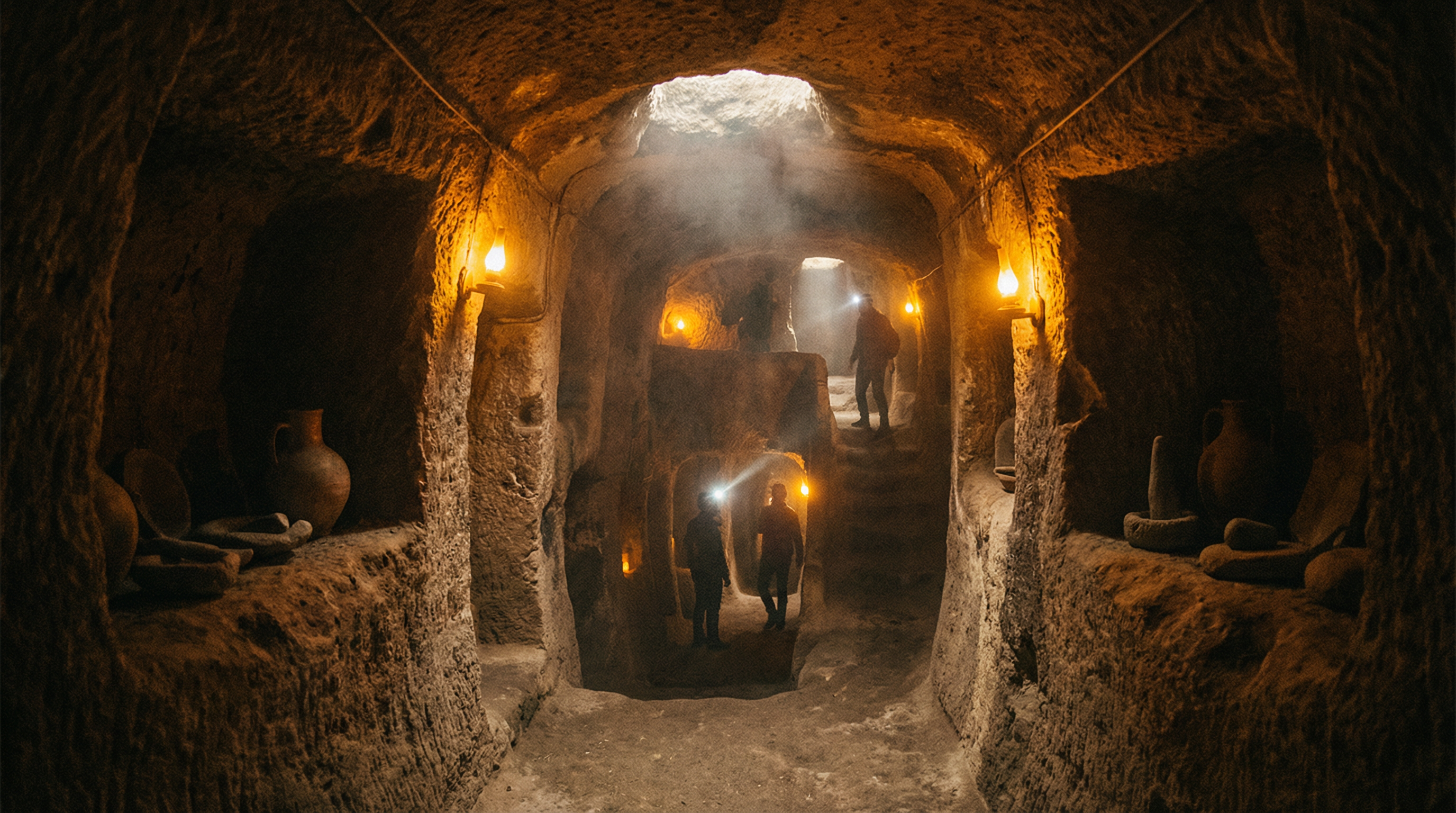
Pre-Pottery Neolithic (unknown culture) · 9600–8200 BCE
Göbekli Tepe
5 min read
Last updated October 26, 2025
A 12,000-year-old megalithic complex in Turkey that is the oldest known monumental architecture on Earth — built 6,000 years before Stonehenge and 7,000 years before the Egyptian pyramids. It was built by hunter-gatherers who, according to conventional history, should not have had the social organization to construct such a site. It was deliberately buried around 8,000 BCE.
Choose your reading style:

By Marcus Hale
Independent Researcher & Archive Curator
Sunbaked Stones and Rising Pillars at Şanlıurfa
In the arid plains near the city of Şanlıurfa, southeastern Turkey, the relentless sun beats down on a landscape dotted with massive limestone pillars thrusting upward from the earth. Dust swirls in the hot breeze, and shadows stretch long over the carved monoliths, each shaped like a colossal T. These imposing pillars, some weighing up to 20 tonnes, emerge from shallow pits arranged in circular enclosures. The site, known as Göbekli Tepe, has reshaped our understanding of prehistoric human activity, revealing a complex that predates Stonehenge and the Egyptian pyramids by thousands of years.
The monumental scale of these structures, combined with their detailed carvings, contrasts sharply with the traditional view of hunter-gatherer societies as small, nomadic bands lacking the organization or skill to undertake such architectural feats. Göbekli Tepe’s pillars soar up to 5.5 meters tall, arranged in clusters that suggest communal purpose. The heat of the region, coupled with the exposed stone surfaces, preserves the intricate bas-reliefs etched into the limestone, hinting at symbolic meanings and ritual functions that archaeologists continue to investigate.
Klaus Schmidt and the 1994 Unveiling of a Prehistoric Sanctuary
Although local shepherds had long known about the hilltop mounds, systematic excavation began only in 1994 under the direction of German archaeologist Klaus Schmidt. His work unveiled a site that dated back to the 10th millennium BCE—roughly 11,600 years ago—placing it in the Pre-Pottery Neolithic period. This discovery pushed back the timeline of monumental stone construction by several millennia, challenging long-held assumptions about the capabilities of prehistoric societies.
Schmidt identified at least 20 circular or oval enclosures at Göbekli Tepe, each bordered by these massive T-shaped pillars. The location was not a settlement but appeared to be a ceremonial center, possibly a sanctuary or a place of pilgrimage. Excavations have so far uncovered only about 5% of the site, leaving much still buried beneath the soil and debris. This small fraction, however, has provided a wealth of information about the site's construction techniques, social organization, and symbolic culture.
Carving Fauna into Stone: Foxes, Snakes, Boars, and Birds
The pillars at Göbekli Tepe are more than architectural supports; they are canvases for impressive carvings of animals and abstract symbols. Among the most frequently depicted creatures are foxes, snakes, boars, and various birds, each rendered with a high degree of naturalism and stylistic consistency. These images are not mere decoration; they likely held significant meaning for the site's builders.
Foxes appear on several pillars, often shown in profile with detailed features, suggesting their importance in the local mythology or as totemic animals. Snakes, winding and sinuous, are carved with care, sometimes intertwined with other symbols, implying a connection to themes of life, death, or spiritual transformation. Boars and birds, including vultures and other raptors, are also prominent, hinting at the complex relationship between humans and the animal world at this early stage of societal development.
The presence of these carvings at such an early date raises questions about the cognitive and symbolic capacities of hunter-gatherer groups. The effort required to quarry, transport, and carve these stones, combined with the choice of animal motifs, suggests a sophisticated cultural system that integrated art, religion, and communal identity.
Engineering Feats: Quarrying and Erecting 20-Tonne Monoliths
Moving and erecting the massive limestone pillars at Göbekli Tepe remains an impressive feat, especially considering the absence of metal tools or wheeled vehicles. The pillars, quarried from a site about 500 meters away, were shaped using flint tools, requiring thousands of hours of labor. Some weigh as much as 20 tonnes and stand over 5 meters tall.
Archaeologists have noted the precise arrangement of the pillars, often set in pairs or clusters within circular enclosures measuring between 10 to 30 meters in diameter. The effort to lift these stones vertically into position would have necessitated coordinated teamwork, advanced knowledge of leverage, and perhaps the use of wooden scaffolds or ramps. Klaus Schmidt and his team propose that these construction activities involved large groups, possibly uniting various clans or bands for ritual purposes.
This level of communal effort and architectural sophistication challenges the simplistic narrative of early Neolithic peoples as purely subsistence-focused. Instead, Göbekli Tepe implies that complex social structures and symbolic behaviors emerged well before the advent of agriculture, potentially even influencing its development.
Shaping Human History: Ritual, Society, and the Dawn of Civilization
Göbekli Tepe’s significance extends beyond its physical structures. It forces a reevaluation of the social dynamics at the dawn of civilization. Traditionally, archaeologists believed that agriculture and settled life came first, leading to the development of religion and monumental architecture. However, Göbekli Tepe suggests the opposite: that the desire for communal ritual and symbolic expression may have driven humans to settle and cultivate the land.
The lack of domestic artifacts such as grinding stones, hearths, or permanent dwellings supports the idea that the site was primarily a ceremonial center rather than a village. This challenges the linear progression model of human development and hints at a more complex interplay between social, spiritual, and economic factors during the Neolithic.
Moreover, the site’s age and scale raise profound questions about the transmission of knowledge and cooperation among hunter-gatherer groups. The monumental construction predates written language and known political hierarchies, yet required coordinated planning and skilled craftsmanship.
The discovery of human burials dating to around 8200 BCE near the site adds another layer of mystery. These burials, often associated with rich grave goods, suggest emerging social stratification or status distinctions linked to the ritual activities at Göbekli Tepe.
If a band of supposed primitives could coordinate the lifting of 20-tonne megaliths, what else have we misunderstood about the dawn of human intelligence?
Marcus Hale
Independent Researcher & Archive Curator
Marcus Hale is an independent researcher and the curator of The Forbidden Archive. He has spent over a decade studying anomalous ancient technologies, cross-referencing primary excavation reports, museum catalogues, and peer-reviewed journals to document artifacts that mainstream history struggles to explain.
Competing Theories
Mainstream: Ritual/ceremonial site built by mobile hunter-gatherers, possibly the origin of organized religion. Alternative: Evidence of a pre-flood civilization with advanced social organization. Skeptical: Hunter-gatherers were more socially complex than previously assumed.
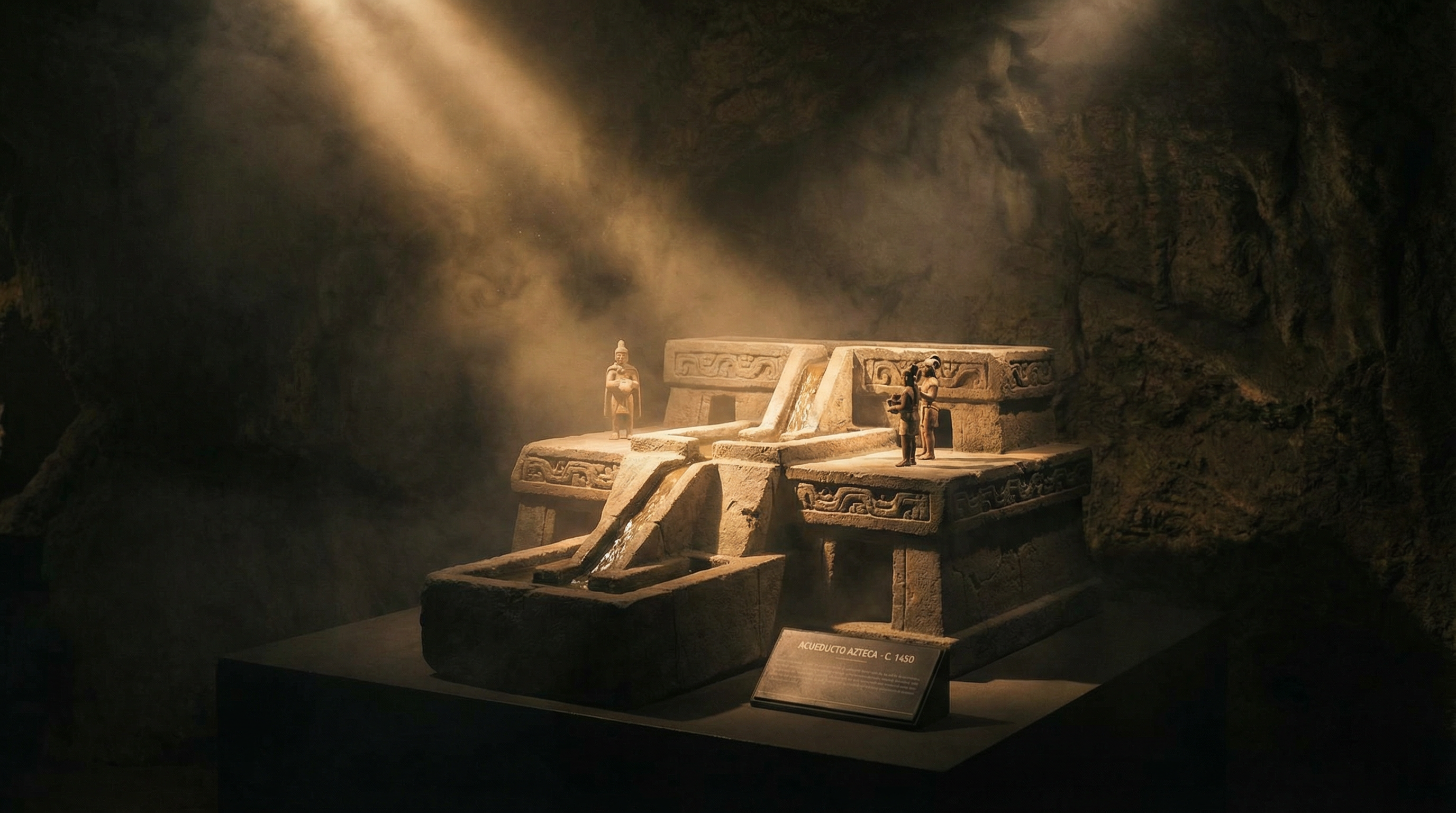



Archive Record
Civilization
Pre-Pottery Neolithic (unknown culture)
Time Period
9600–8200 BCE
Approximate Date
9600 BCE
Origin
Şanlıurfa Province, Turkey
Discovered
Şanlıurfa, Turkey, 1994 (excavation began)
Current Location
Şanlıurfa, Turkey (in situ)
Dimensions
T-shaped pillars up to 5.5m tall, 10–20 tonnes each
Materials
Limestone
Quick Facts
- ▸T-shaped limestone pillars up to 5.5m tall, weighing 10–20 tonnes.
- ▸Carved with reliefs of animals (foxes, snakes, boars, birds).
- ▸Circular enclosures 10–30m diameter.
- ▸At least 20 enclosures identified (only 5% excavated).
- ▸Deliberately buried around 8,200 BCE.
- ▸No evidence of permanent habitation nearby.