Inca Empire · Medieval
Inca Road System
6 min read
Last updated April 4, 2026
A 40,000-km road network connecting the Inca Empire from Colombia to Chile, including suspension bridges, tunnels, and roads cut into vertical cliff faces — built without wheeled vehicles or iron tools.
Choose your reading style:

By Marcus Hale
Independent Researcher & Archive Curator
Imagine a vast empire, stretching over 4,000 kilometers, from the sun-drenched coasts to the icy peaks of the Andes. Now, imagine this empire unified not by a single river or a flat plain, but by an intricate web of roads, bridges, and tunnels – a network so sophisticated it scaled mountains, traversed deserts, and crossed raging rivers, all without the benefit of wheeled vehicles or iron tools. This is the enigma of the Inca Road System, or Qhapaq Ñan, a testament to human ingenuity that continues to baffle and inspire. At The Forbidden Archive, we delve into the secrets of this ancient marvel, exploring how a civilization, often perceived as "primitive" by Eurocentric standards, achieved an engineering feat unparalleled in its time.
Historical Background and the Empire's Arteries
The Inca Empire, or Tawantinsuyu, flourished in the Andean region of South America from the early 13th century until its conquest by the Spanish in the 16th century. Its rapid expansion and efficient administration were inextricably linked to its unparalleled road network. While many pre-Inca cultures, such as the Wari and Tiwanaku, had established regional pathways, it was the Incas who consolidated and expanded these into a truly imperial system. The Qhapaq Ñan, meaning "Royal Road" or "Beautiful Road" in Quechua, was not merely a collection of trails; it was a meticulously planned and constructed infrastructure project that served as the very circulatory system of the empire. It facilitated the rapid movement of armies, the efficient transport of goods, and the swift communication of messages via chasquis (relay runners), binding together a diverse and often rugged landscape.
Spanish chroniclers, upon their arrival, were astounded by the scale and quality of these roads. Pedro Cieza de León, in his "Crónica del Perú," described them as "one of the greatest works seen in the world." Yet, despite their detailed accounts, the full extent of the system and the sheer effort involved in its creation were only truly appreciated through modern archaeological surveys and the recognition of its UNESCO World Heritage status in 2014. This network, estimated to be over 40,000 kilometers long, connected the four suyus (regions) of the empire, from present-day Colombia in the north to Chile and Argentina in the south, traversing some of the most challenging terrain on Earth.
Technical Analysis: Engineering Beyond Expectation
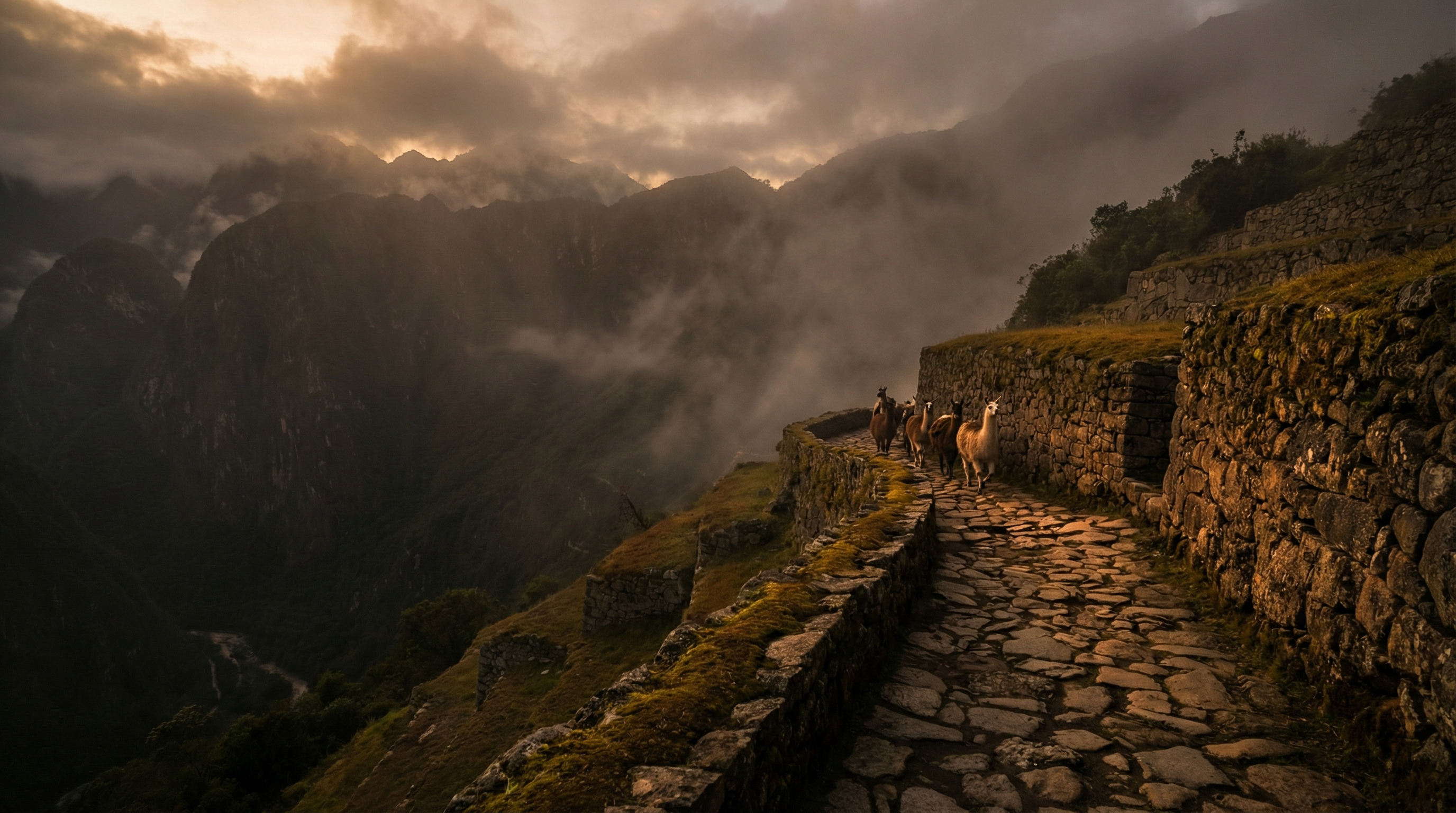
What makes the Qhapaq Ñan truly remarkable is not just its length, but the sheer technical prowess demonstrated in its construction. Without the wheel, a fundamental invention for most large-scale infrastructure projects, the Incas relied on an intimate understanding of their environment and sophisticated labor organization. Roads were often paved with precisely fitted stones, especially in highland regions, or compacted earth in coastal areas. They maintained a remarkably consistent grade, even when ascending or descending mountains with elevation changes of up to 6,000 meters. This was achieved through a series of switchbacks, terraces, and carefully engineered inclines that minimized erosion and maximized efficiency for foot traffic and llama caravans.
Perhaps the most astonishing elements of the Qhapaq Ñan were its bridges. Faced with deep canyons and raging rivers, the Incas developed ingenious solutions. Stone bridges were built where possible, but it was their suspension bridges that truly defied belief. Woven from twisted ichu grass fibers, these bridges could span chasms over 60 meters wide. These engineering marvels, such as the famous Q'eswachaka bridge, were not merely functional; they were regularly maintained and rebuilt by local communities as a form of mit'a (a system of communal labor tribute), showcasing a sustainable and integrated approach to infrastructure management. Furthermore, the Incas carved roads directly into vertical cliff faces, constructed tunnels through mountains, and built causeways over wetlands, demonstrating a mastery of diverse construction techniques adapted to every conceivable landscape.
Competing Theories and Scholarly Debate
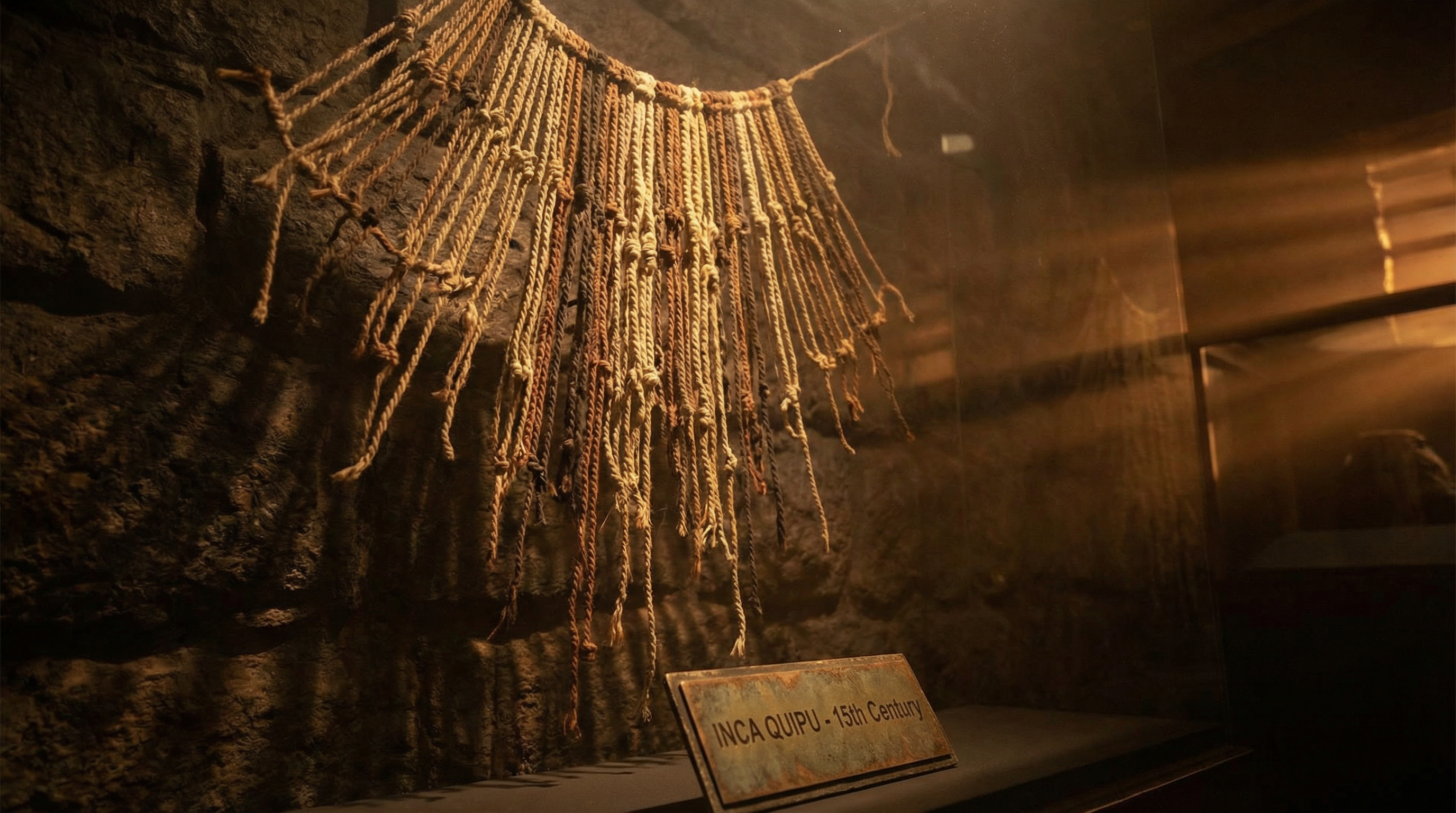
While the existence and scale of the Qhapaq Ñan are undisputed, scholarly debate often centers on the precise mechanisms of its construction and the extent of its pre-Inca origins. Some theories suggest that the Incas largely appropriated and improved existing Wari and Tiwanaku routes, while others emphasize the unique Inca contributions in terms of standardization, imperial integration, and sheer scale. The question of how such a massive undertaking was coordinated without written language (beyond quipu, a system of knotted cords for record-keeping) and without advanced surveying tools remains a topic of intense discussion.
The prevailing theory attributes the success of the Qhapaq Ñan to the highly organized Inca state and the mit'a system. This labor draft required every able-bodied person to contribute a certain amount of time to public works, including road construction and maintenance. This decentralized yet centrally directed system allowed for the mobilization of vast numbers of workers, each contributing specialized skills, from stone masonry to rope weaving. However, the exact planning methodologies, the transfer of complex engineering knowledge across generations, and the detailed logistical management of supplies for thousands of workers in remote locations still present fascinating avenues for further research and archaeological investigation.
Challenging Conventional Historical Narratives
The Inca Road System profoundly challenges conventional historical narratives that often place wheeled transport and iron tools as prerequisites for large-scale infrastructure and advanced civilization. The Qhapaq Ñan demonstrates that a sophisticated understanding of materials, an innovative approach to engineering, and an exceptionally well-organized social structure can overcome perceived technological limitations. It forces us to reconsider what constitutes "advanced" technology and to appreciate the diverse paths human ingenuity can take.
This monumental achievement also highlights the environmental sensitivity of Inca engineering. Unlike many modern road projects that scar landscapes, the Qhapaq Ñan was often integrated into the natural contours of the land, minimizing erosion and utilizing local materials. It stands as a powerful counter-narrative to the idea that technological progress must inevitably lead to environmental degradation, offering lessons in sustainable infrastructure that resonate even today.
Conclusion: A Legacy Woven into the Andes
The Qhapaq Ñan is more than just a network of ancient roads; it is a profound testament to the organizational genius and engineering prowess of the Inca Empire. It allowed for the rapid expansion and efficient administration of one of the largest empires in the pre-Columbian Americas, fostering communication, trade, and cultural exchange across a vast and challenging landscape. From its incredible suspension bridges woven from grass to its meticulously graded mountain passes, the Royal Road stands as a monument to human determination and ingenuity.
Today, remnants of the Qhapaq Ñan continue to be used by local communities, a living legacy of an ancient marvel. Its enduring presence reminds us that "primitive" technologies can achieve extraordinary results when coupled with deep environmental knowledge, innovative problem-solving, and a highly organized society. As we continue to uncover its secrets, the Inca Road System remains a powerful symbol of a civilization that literally moved mountains, leaving an indelible mark on the Andean landscape and challenging our perceptions of what was truly possible in the ancient world.
Marcus Hale
Independent Researcher & Archive Curator
Marcus Hale is an independent researcher and the curator of The Forbidden Archive. He has spent over a decade studying anomalous ancient technologies, cross-referencing primary excavation reports, museum catalogues, and peer-reviewed journals to document artifacts that mainstream history struggles to explain.
Competing Theories
The logistics of building and maintaining 40,000 km of roads across the Andes without wheeled transport implies a sophisticated labour organisation system (mit'a) and engineering knowledge accumulated over centuries.
Archive Record
Civilization
Inca Empire
Time Period
Medieval
Approximate Date
c. 1438–1533 CE
Origin
Andes Mountains, South America
Current Location
Andes Mountains (UNESCO World Heritage Site)
Materials
Stone, earth, wood