
Arab/Norman · Medieval
The Tabula Rogeriana Medieval World Map
5 min read
Last updated April 11, 2026
Created by Arab geographer al-Idrisi for the Norman King Roger II of Sicily, this was the most accurate world map for three centuries, engraved on a massive silver disc.
Also in This Category


Choose your reading style:

By Marcus Hale
Independent Researcher & Archive Curator
Unveiling the World: The Enduring Legacy of the Tabula Rogeriana
Imagine a world where the known lands were etched not on fragile parchment, but on a colossal disc of gleaming silver, a testament to unparalleled knowledge and ambition. This wasn't a fantasy, but a reality in 12th-century Sicily, where the brilliant mind of Arab geographer al-Idrisi, under the patronage of the Norman King Roger II, forged what would become the most accurate world map for nearly three centuries: the Tabula Rogeriana. This extraordinary artifact, though its original silver form is now lost to history, represents a pinnacle of medieval cartography, a convergence of diverse intellectual traditions that reshaped humanity's understanding of its own planet.
A Crucible of Knowledge: Historical Context of Norman Sicily
The story of the Tabula Rogeriana is inextricably linked to the unique cultural tapestry of Norman Sicily. By the 12th century, this island kingdom was a vibrant melting pot where Latin, Greek, and Arabic cultures flourished under the enlightened rule of the Norman kings. Roger II, a monarch renowned for his intellectual curiosity and patronage of the arts and sciences, actively sought out scholars and artisans from across the Mediterranean. He envisioned a grand project: a definitive description of the known world, accompanied by a comprehensive map that would surpass all previous attempts.
To realize this ambitious goal, Roger II commissioned Muhammad al-Idrisi, a celebrated Arab geographer, cartographer, and botanist born in Ceuta (modern-day Morocco). Al-Idrisi had traveled extensively, gathering firsthand accounts and compiling existing geographical data. For over 15 years, from approximately 1138 to 1154 CE, al-Idrisi worked tirelessly in Palermo, the Norman capital. He wasn't simply drawing a map; he was conducting a monumental research project. Roger II reportedly sent out expeditions to gather information, and al-Idrisi meticulously cross-referenced existing texts from Greek, Roman, Persian, and Arab sources, interviewing countless travelers, merchants, and sailors. This rigorous, almost scientific, approach set the stage for an unprecedented leap in geographical accuracy.
Engineering the World: Technical Analysis of the Tabula Rogeriana
The original Tabula Rogeriana was a truly magnificent creation. It was engraved on a massive circular silver planisphere, reportedly measuring over two meters (approximately 6.5 feet) in diameter and weighing around 400 pounds. This choice of material was not merely for aesthetics; silver provided a durable, prestigious surface that could be meticulously engraved with fine detail. The map depicted the world with south at the top, a common orientation in Arab cartography of the period, encompassing Europe, Asia, and the northern parts of Africa.
Accompanying the silver map was a monumental 70-part book, Nuzhat al-mushtāq fī ikhtirāq al-āfāq (commonly translated as "The Excursion of One Who Is Eager to Traverse the Regions of the World"), also known as Kitāb Rujār (Roger's Book). This text provided detailed descriptions of each region depicted on the map, including geographical features, cities, cultures, and economic activities. The map itself was divided into seven climate zones, or climata, a system inherited from Greek geography, and each zone was further subdivided into ten sections.
What made the Tabula Rogeriana so revolutionary was its unprecedented precision. While not without errors (as all maps before the age of satellite imagery), it significantly improved upon existing Ptolemaic and earlier Arab maps. It accurately depicted the sources of the Nile, the shape of the Indian subcontinent, and the outlines of the European continent with remarkable fidelity for its time. The integration of empirical data gathered by Roger's envoys with existing scholarly knowledge allowed al-Idrisi to synthesize a cartographic work of astounding detail and scope. The sheer scale of the project, combining a monumental physical map with an exhaustive written gazetteer, speaks volumes about the intellectual ambition driving its creation.
Beyond the Silver: Competing Theories and Interpretations
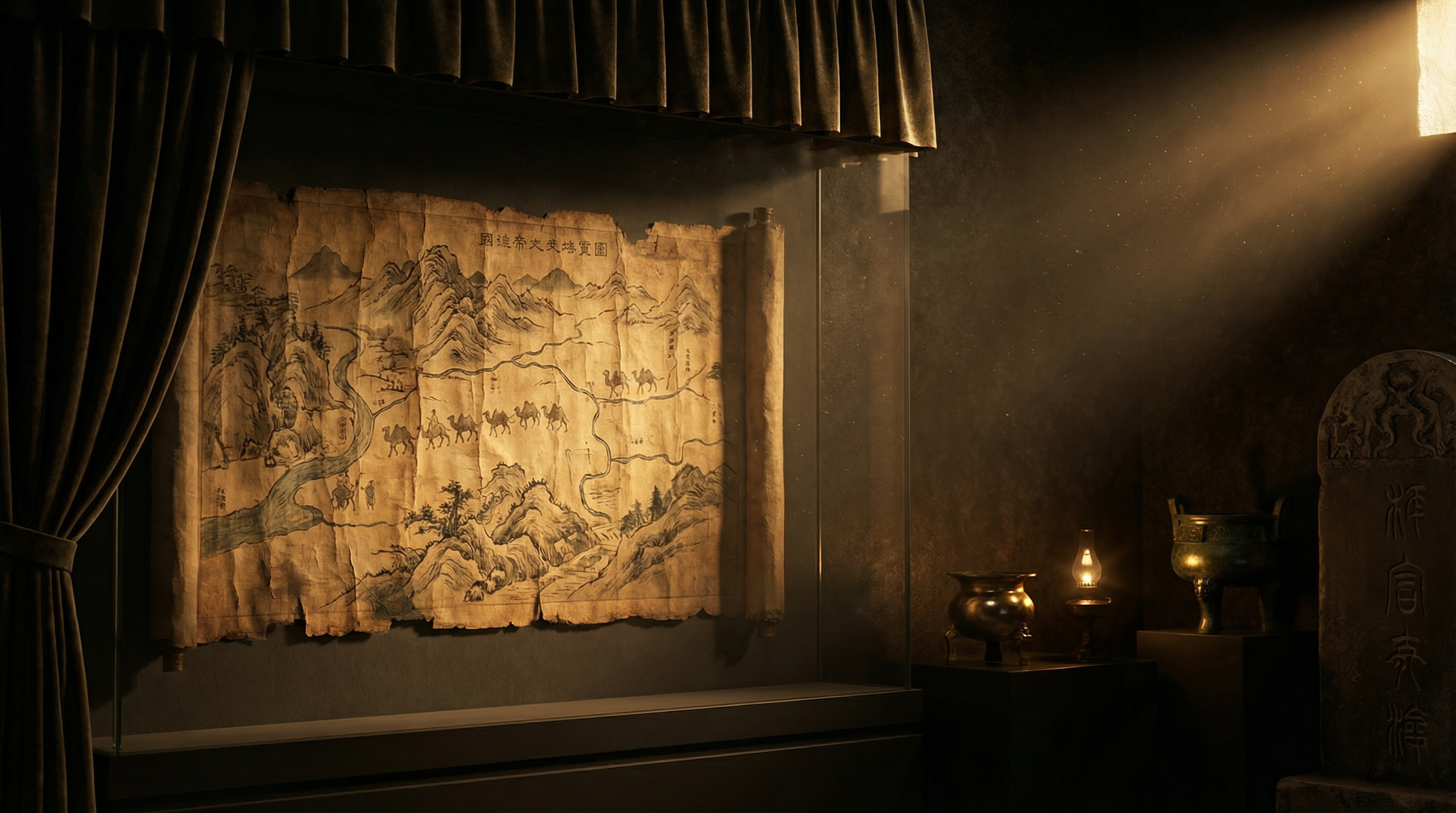
While the existence and significance of the Tabula Rogeriana are undisputed, certain aspects remain subjects of scholarly debate. The most poignant mystery is the fate of the original silver planisphere. Historical accounts suggest it was plundered and melted down during political upheavals in Palermo shortly after Roger II's death. This loss means our understanding of the map relies entirely on the surviving paper copies of al-Idrisi's accompanying book, which include smaller, diagrammatic versions of the main map and its sectional components. Scholars continue to debate how closely these surviving copies reflect the intricate detail of the lost silver original. Were the paper copies simplified for reproduction, or do they largely preserve the original's cartographic intent?
Another area of discussion revolves around the precise extent of Greek and Arab influence. While al-Idrisi was an Arab scholar, he explicitly drew upon Ptolemy's Geography and other classical sources. The genius of the Tabula Rogeriana lies not in its sole originality, but in its masterful synthesis and critical evaluation of diverse knowledge traditions. Al-Idrisi didn't merely copy; he refined, corrected, and expanded, creating a new standard for medieval cartography. Some argue that the map's accuracy was due more to the systematic data collection commissioned by Roger II than to al-Idrisi's individual genius, though it is clear that both played crucial roles.
A Guiding Light: Modern Significance of the Tabula Rogeriana
The impact of the Tabula Rogeriana was profound and long-lasting. For nearly three centuries, it remained the most authoritative and accurate depiction of the known world, influencing subsequent generations of cartographers in both the Islamic world and Europe. Its detailed descriptions and geographical innovations were disseminated through Latin translations, providing invaluable knowledge to European scholars and explorers. It served as a foundational text for understanding the world until the Age of Exploration, when new discoveries and improved navigational techniques began to render its details obsolete.
Today, the Tabula Rogeriana stands as a powerful testament to the intellectual dynamism of the medieval period and the extraordinary achievements possible when diverse cultures collaborate. It underscores the importance of patronage in scientific advancement and highlights the sophisticated scientific methods employed by scholars like al-Idrisi. The surviving copies, housed in prestigious libraries across Europe, continue to be studied by historians of science, cartography, and medieval culture, offering a window into how people in the 12th century perceived and organized their world. This Norman Sicily map is not just an ancient artifact; it is a monument to human curiosity and the relentless pursuit of knowledge.
The Tabula Rogeriana challenges our often-oversimplified view of the Middle Ages as a period of intellectual stagnation. Instead, it reveals an era of vibrant cross-cultural exchange and groundbreaking scientific inquiry. What other lost masterpieces of ancient technology lie undiscovered, waiting to rewrite our understanding of history?
Marcus Hale
Independent Researcher & Archive Curator
Marcus Hale is an independent researcher and the curator of The Forbidden Archive. He has spent over a decade studying anomalous ancient technologies, cross-referencing primary excavation reports, museum catalogues, and peer-reviewed journals to document artifacts that mainstream history struggles to explain.
Want More Discoveries Like This?
Get new investigations on ancient mysteries delivered to your inbox. Free, no spam.
📖 Take the Archive With You
Enjoyed this mystery? The full ebook covers 50 Ancient Mysteries in depth — lost technologies, suppressed histories, and artifacts that shouldn't exist. 300+ pages, instant PDF download.
Competing Theories
Compilation of Greek, Arab, and Norman geographic knowledge into the most advanced medieval cartography
Archive Record
Civilization
Arab/Norman
Time Period
Medieval
Approximate Date
1154 CE
Discovered
Palermo, Sicily
Current Location
Various copies in European libraries
Materials
Silver planisphere (lost), paper copies survive