Rajputana · Medieval
Ancient Indian Zinc Smelting
5 min read
Last updated February 27, 2026
The Zawar mines in Rajasthan contain evidence of industrial-scale zinc smelting dating to the 9th century CE — 400 years before zinc was isolated in Europe.
Also in This Category

Choose your reading style:

By Marcus Hale
Independent Researcher & Archive Curator
The Zawar Smelting Operations of the 9th Century
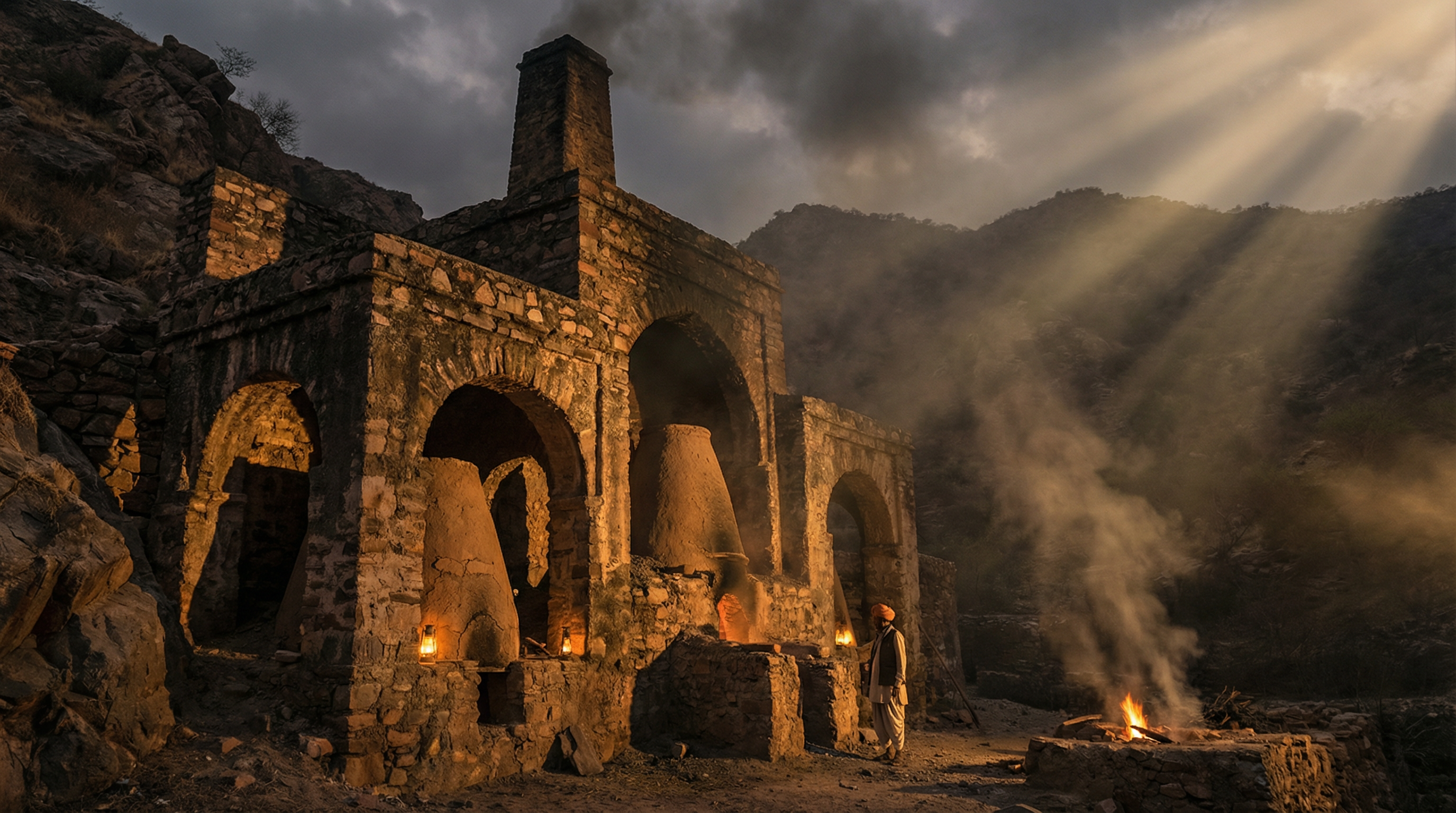
In 1746 CE, the German chemist Andreas Marggraf officially isolated zinc in Europe, claiming a major victory for modern metallurgy. Yet, more than 800 years prior, engineers in the Aravalli hills of Rajasthan were already producing metallic zinc at an industrial scale. The archaeological site at Zawar contains the remains of a sophisticated operation that defies traditional timelines of chemical engineering. Here, deep in the Rajputana region, ancient metallurgists mastered a complex downward distillation process that required precise temperature control and specialized equipment.
Zinc is notoriously difficult to extract from its ore. Unlike copper or iron, zinc boils and vaporizes at 907 degrees Celsius, which is lower than the temperature required to smelt it from zinc oxide, typically around 1000 degrees Celsius. If exposed to air, the vapor immediately oxidizes back into a useless powder. To solve this problem, the engineers at Zawar developed a unique method using sealed clay retorts. They packed these containers with a mixture of roasted zinc ore and organic matter, then placed them inverted in a specially designed furnace.
The scale of production at Zawar was immense, reflecting a society with high demand for brass and zinc alloys. The sheer volume of discarded retorts, estimated in the millions, indicates continuous, large-scale manufacturing over several centuries. This was not a small artisan workshop, but a sprawling industrial complex requiring a highly organized workforce, standardized production of clay vessels, and a deep understanding of thermodynamics and materials science.
Engineering the Downward Distillation Process
The ingenuity of the Zawar system lies in its condensation chambers. As the furnace heated the upper portion of the retorts to over 1000 degrees Celsius, the zinc vaporized. Instead of escaping upward into the fire, the vapor was forced downward through a clay tube into a cooler condensation vessel located in the lower chamber of the furnace. This precise thermal gradient allowed the vapor to cool and liquefy into pure metallic zinc without coming into contact with oxygen.
Archaeological excavations at Zawar have revealed massive banks of these furnaces. Each furnace could hold up to 36 retorts, and a single firing could produce a substantial amount of pure zinc. The design of the furnaces themselves shows a clear understanding of heat distribution and airflow. The perforated clay grates supporting the retorts allowed for optimal heating while protecting the lower condensation chambers from the intense heat of the fire above.
The materials used in the construction of the retorts were also highly specialized. The local clay was mixed with organic materials like rice husks and cow dung, which not only provided structural integrity at high temperatures but also helped create the reducing atmosphere necessary for the smelting process. This level of material engineering demonstrates a profound empirical knowledge of chemistry and ceramics.
Tracing the Spread of Metallurgical Knowledge
The timeline of this technology presents a significant puzzle for historians of science. The Zawar mines show evidence of continuous zinc production from at least the 9th century CE through the 19th century. The sophistication of the downward distillation process strongly implies a long period of trial and error preceding the 9th century. How did this specific knowledge travel, and what were its origins?
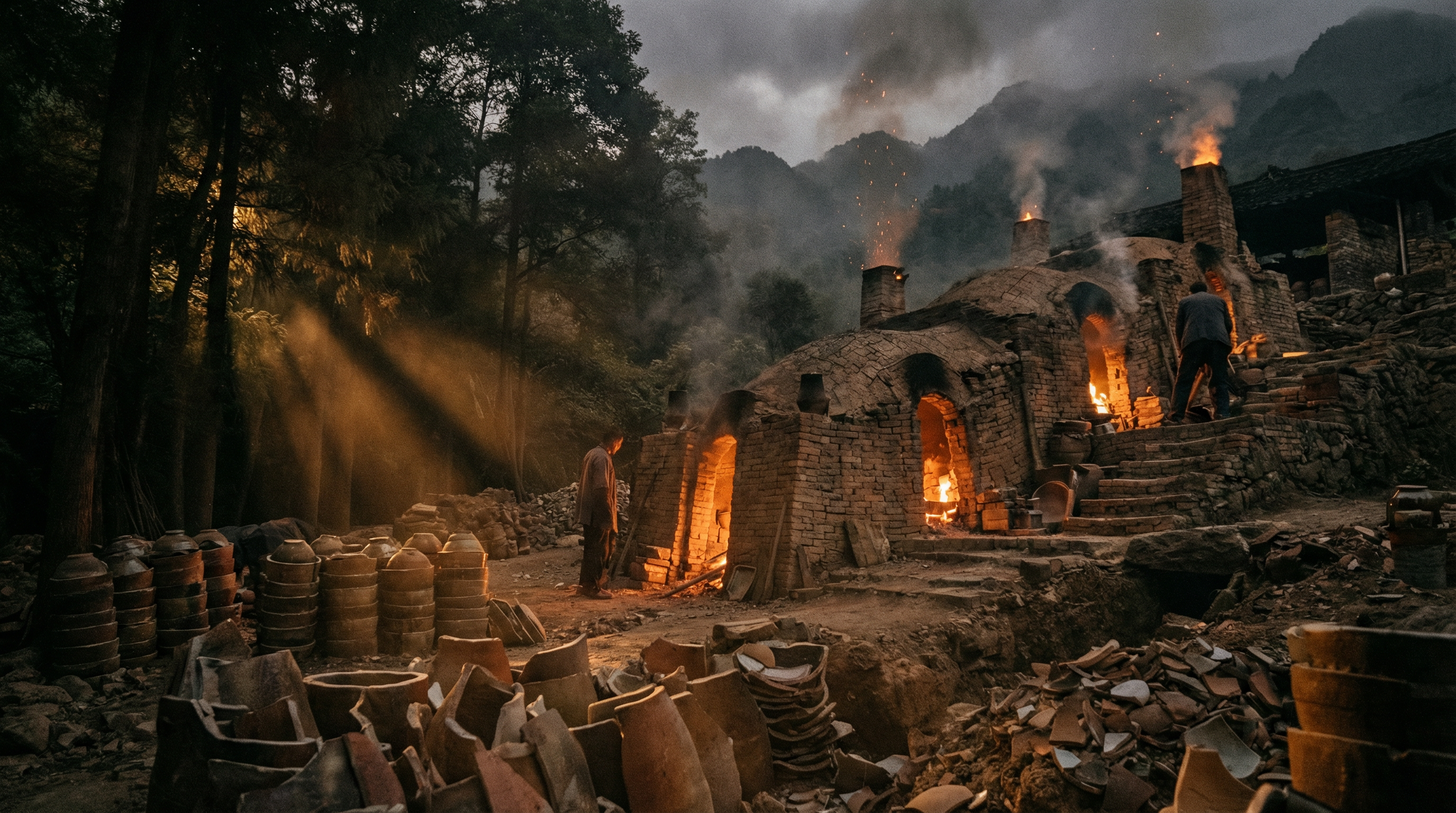
Historical records suggest that the technique did not remain isolated in Rajasthan. By the 16th century, similar zinc smelting methods appeared in China, likely transmitted via established trade routes. The Chinese adapted the process, and eventually, this knowledge made its way to Europe. The British metallurgist William Champion patented a zinc smelting process in 1738 that bears a striking resemblance to the Zawar method, raising questions about the true origins of the European industrial revolution in metallurgy.
The Zawar site forces a reevaluation of ancient Indian chemistry. The ability to manipulate volatile elements and design complex condensation systems requires a level of scientific reasoning often attributed only to later eras. The physical evidence left behind—the slag heaps, the furnaces, and the countless retorts—provides a concrete record of this early industrial achievement.
Reevaluating the History of Chemistry
The story of zinc smelting at Zawar is not just about producing a metal; it is about the mastery of invisible gases and precise thermal dynamics. The ancient metallurgists recognized the specific properties of zinc and engineered a solution that worked perfectly within their technological constraints. Their success challenges the narrative that complex chemical engineering began in the laboratories of early modern Europe.
As researchers continue to study the remains at Zawar, they uncover more details about the scale and efficiency of the operation. The site remains a crucial piece of evidence in understanding the global history of technology and the flow of scientific knowledge across continents. The mastery of zinc at Zawar demonstrates an early industrial capability that predates similar European developments by many centuries, fundamentally altering our understanding of ancient metallurgy.
The implications of the Zawar discoveries extend beyond the history of science. They highlight the economic and cultural importance of zinc in ancient India, where it was primarily used to produce brass. The high demand for this golden alloy, used for coins, statues, and everyday objects, likely drove the innovation and scaling of the smelting process. The wealth generated by this industry would have had significant regional impacts, supporting trade networks and funding local kingdoms.
Given the precise thermal control and specialized equipment required for this 9th-century process, how many other advanced chemical engineering techniques from the ancient world have been lost to history because they leave behind less durable evidence than the millions of clay retorts at Zawar?
Marcus Hale
Independent Researcher & Archive Curator
Marcus Hale is an independent researcher and the curator of The Forbidden Archive. He has spent over a decade studying anomalous ancient technologies, cross-referencing primary excavation reports, museum catalogues, and peer-reviewed journals to document artifacts that mainstream history struggles to explain.
Join the Archive
Enjoyed This Mystery?
Get new discoveries like this delivered to your inbox every week. Ancient technologies, lost sciences, and suppressed history — free.
Competing Theories
The sophistication of the Zawar process, including temperature control and condensation chambers, suggests a long period of experimental development. The knowledge may have spread to China and eventually Europe via trade routes.
Archive Record
Civilization
Rajputana
Time Period
Medieval
Approximate Date
c. 9th century CE
Origin
Zawar, Rajasthan, India
Current Location
Archaeological site, Zawar
Materials
Zinc ore, retorts